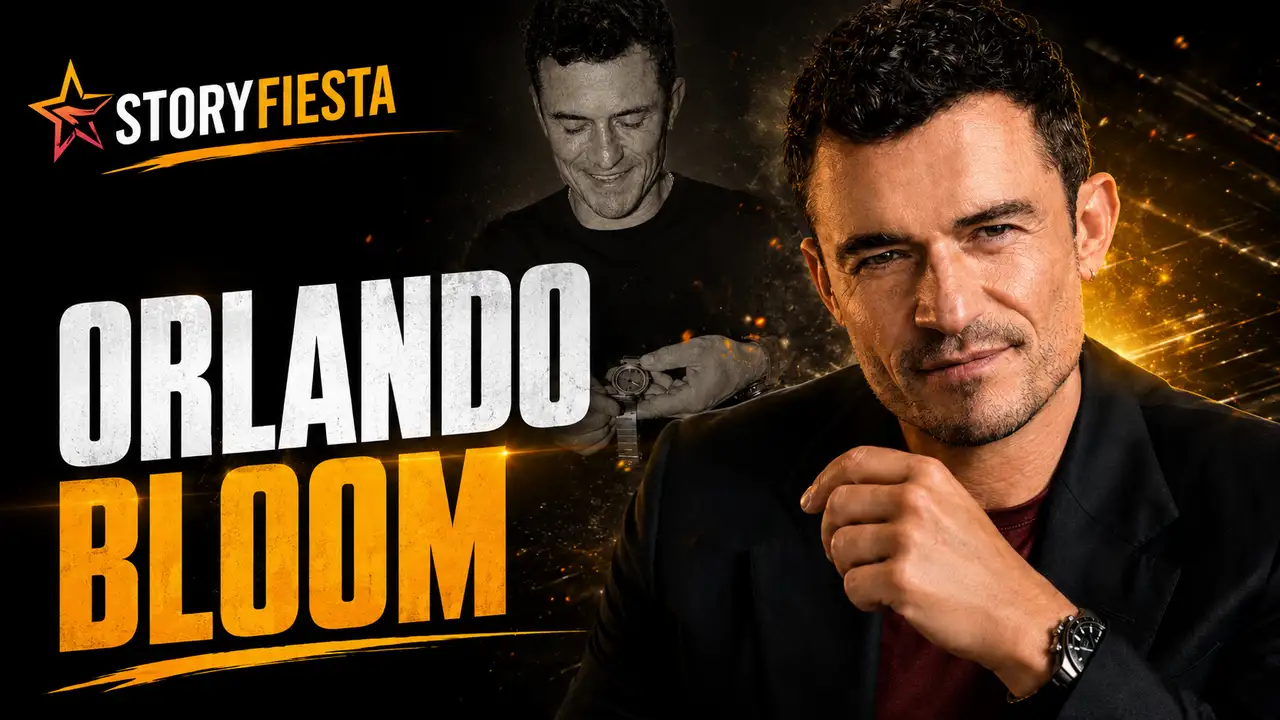
Orlando Bloom visited the Rohingya refugee camps in Cox’s Bazar, Bangladesh, during a four-day UNICEF mission in November 2025. He met children, families and aid workers while examining how reductions in international assistance were affecting education, nutrition, health and protection services.
The visit extended a relationship with UNICEF that began in Nepal in 2007. Bloom became a Goodwill Ambassador two years later and has since participated in field visits and international discussions focused on children affected by poverty, displacement and conflict.
From Canterbury Training to International Recognition
Bloom was born and raised in Canterbury, Kent. After attending school there, he joined the National Youth Theatre in London and earned a scholarship to train with the British American Drama Academy. He later studied at the Guildhall School of Music and Drama.
His dramatic training led to an internationally recognized acting career. Although his public profile developed primarily through screen work, institutional recognition later connected his professional achievements with his home city. The University of Kent awarded him an honorary degree in July 2010.
He received a star on the Hollywood Walk of Fame in 2014. By that point, his public work had also expanded beyond acting, with UNICEF becoming a sustained part of his activities.
A UNICEF Commitment Beginning in Nepal
Bloom first supported UNICEF in 2007, when he took part in a four-day visit to Nepal. He traveled to schools and villages in Kaski and Chitwan, where he learned about water and sanitation programs supported by the organization.
UNICEF appointed him a Goodwill Ambassador in 2009 in recognition of his commitment to children’s rights. His activities subsequently took him to countries including Bangladesh, Jordan, Liberia, Niger and Ukraine. UNICEF presents these destinations as examples rather than a complete record of every trip.
His role has involved more than speaking at public events. Official records trace his visits to communities affected by poverty, displacement, malnutrition and armed conflict. Bloom has said that he values UNICEF’s approach because it combines humanitarian assistance with practical tools intended to improve the long-term lives of children and women.
Responding to the Effects of War on Children
In 2023, Bloom returned to Ukraine for a three-day UNICEF visit to Kyiv, Irpin and Demydiv. The trip allowed him to observe how the continuing war was affecting children more than a year after the conflict sharply escalated in February 2022.
His involvement also reached international policy discussions. At the Clinton Global Initiative event in 2023, he delivered the opening speech for a session concerning Ukraine’s immediate needs and the longer process of recovery and rebuilding.
During the same year, he participated in UNICEF events that placed children’s rights within the Sustainable Development Goals. His contribution focused on keeping children and young people central to decisions about development and recovery.
Other documented UNICEF activities have addressed malnutrition, vaccination and mental health. In 2022, he backed UNICEF’s severe-wasting alert and urged increased funding for prevention, detection and treatment.
Inside the Rohingya Refugee Camps
Bloom’s four-day visit to Cox’s Bazar in November 2025 brought him into direct contact with conditions inside the Rohingya refugee camps. UNICEF described the settlements as home to approximately half a million children who depend heavily on humanitarian assistance.
He spoke with children, families, teachers and aid workers about how funding cuts were disrupting essential services. At a UNICEF-supported school, he spoke with students about their studies and plans for the future.
One student told him that he wanted to become an engineer, while another hoped to study medicine and help other girls. Bloom used those conversations to call attention to what children could lose if schools were forced to close.
The visit also covered problems beyond education. He met mothers of children experiencing acute malnutrition and heard about the difficulties facing services responsible for nutrition, sanitation, health and child protection.
Why Education Became the Central Concern
Funding shortages had already disrupted education in the camps. UNICEF reported that most schools were temporarily closed in June 2025, affecting almost 150,000 children. Learning later resumed following fundraising efforts, but the financial position remained uncertain.
The organization warned that further shortages in early 2026 could leave more than 300,000 children without education. That figure came from UNICEF’s assessment rather than Bloom’s independent calculation.
Bloom emphasized that schools provide more than classroom instruction. For displaced children, they can also offer structured and comparatively safe spaces away from exploitation, trafficking, child marriage and recruitment by armed groups.
He paid particular attention to the consequences for girls and adolescents. After meeting students who wanted to continue their education, he argued that keeping schools operating was essential to preserving their future options.
His public message from Cox’s Bazar asked the international community to maintain support for children whose access to education and other services depends on humanitarian funding.
Malnutrition and Child Protection Risks
The conditions Bloom encountered included serious nutrition concerns. UNICEF reported that admissions for severe acute malnutrition among children under five rose 11 percent from January to September 2025.
During the visit, he met mothers whose young children were experiencing acute malnutrition. UNICEF was supporting feeding programs and treatment, but the organization warned that reduced funding could restrict access to those services.
Protection risks were also growing. UNICEF reported that more than 400 Rohingya children in the camps were affected by serious human-rights violations in October 2025, mainly abduction and recruitment by armed groups. The recorded total was three times higher than during the corresponding period a year earlier.
Bloom spoke with two children who had escaped after being abducted and held for several months. He described their experiences as deeply distressing and called for stronger measures to protect children from violence, exploitation and further harm.
Water and sanitation formed another part of the situation. UNICEF reported an increase in skin diseases associated with poor sanitation while trying to maintain safe water and hygiene support across the camps.
Personal Growth Behind His Public Work
Bloom has discussed how personal experiences influence his approach to fear, pressure, and public service. In a May 2024 interview with Rich Roll, he said he deliberately places himself in challenging situations because he does not want to move through life without continuing to grow.
He connected demanding physical activities with preparation, trust, and presence. His comments did not treat discipline as complete control; instead, he described a balance between careful preparation and accepting what could not be controlled once a challenge began.
Bloom also identified Buddhism as a long-term personal practice. He said it helps him remain centered and focused during difficult situations. His public comments establish the importance of the practice to him without defining every aspect of his beliefs or observance.
A serious injury during his youth also shaped his understanding of vulnerability. In a first-person video released by UNICEF for World Mental Health Day in 2022, Bloom recalled falling three stories and breaking his back at 19. He spoke about the emotional strain of facing an uncertain physical recovery, connecting the experience with his interest in mental-health awareness.
Recognition for Sustained Humanitarian Service
Bloom received two major humanitarian honors in 2015. BAFTA presented him with the Britannia Humanitarian Award, while UNICEF presented him with the Audrey Hepburn Humanitarian Award at its Snowflake Ball.
Both honors followed years of involvement that had started before his appointment as a Goodwill Ambassador. By 2015, his UNICEF record already included field visits to communities facing difficulties with education, sanitation, health and displacement.
The years that followed added work connected with vaccination, severe malnutrition, sustainability, mental health and children affected by war. His 2025 return to Bangladesh continued the field-based part of that role rather than limiting it to award ceremonies or public appearances.
Bloom’s own explanation of UNICEF’s work has focused on helping communities address problems over the longer term. That approach connects emergency support with education, protection and services intended to improve children’s prospects after an immediate crisis.
A Continuing Focus on Children’s Futures
Orlando Bloom’s visit to the Rohingya camps extended humanitarian work that began with a UNICEF mission to Nepal in 2007. Since becoming a Goodwill Ambassador in 2009, he has participated in field visits and public advocacy on behalf of children affected by poverty, displacement, malnutrition, and conflict.
In Cox’s Bazar, his attention centered on the practical consequences of reduced funding. Schools faced possible closure, nutrition services were under pressure, and reports of abduction and armed-group recruitment had increased.
His November 2025 visit placed children’s own ambitions within that wider emergency. By meeting with students, families and humanitarian workers, Bloom used his role at UNICEF to draw attention to keeping education, nutrition and protection services operating for Rohingya children.