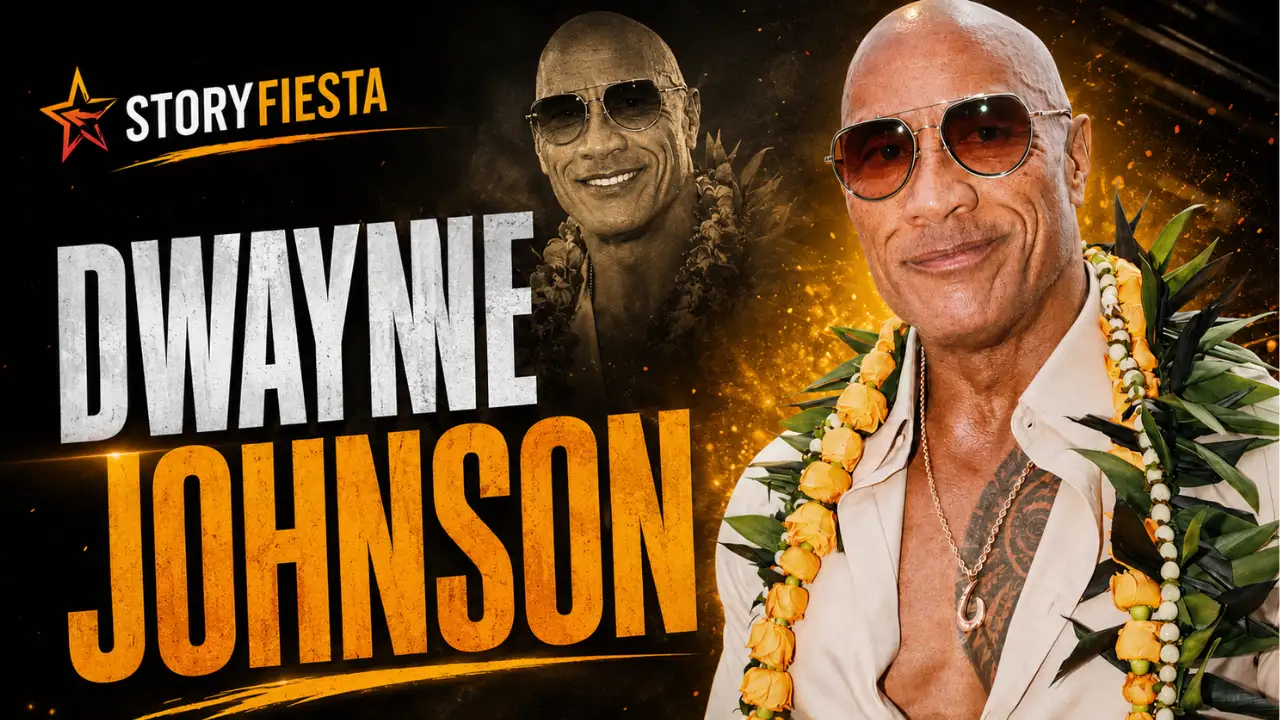
Football was the foundation of the future Dwayne Johnson originally envisioned. He attended the University of Miami as a student-athlete, graduated in 1995, and attempted to continue in the sport professionally. When that opportunity ended, he had to find another direction.
Wrestling provided the next opening, but it did not become the final limit of his work. Johnson later expanded into producing, business leadership, and football-league ownership. He has also used his experience to discuss mental health and help create opportunities for players whose original plans may not work out as expected.
When Football Plans Fell Apart
In 1995, Johnson completed a Bachelor of General Studies after studying and playing football at the University of Miami. Football was not a temporary interest or a minor part of his education. It was the professional path he expected to follow.
That plan changed after injuries and the end of his attempt to continue playing professionally. Johnson has described the experience as more than a disappointing career result. During a 2023 appearance on The Pivot Podcast, he connected one of the most difficult emotional periods of his life with an injury and the collapse of his football ambitions.
At the time, he did not fully understand what he was experiencing. In later interviews, he described the period as one of several encounters with depression. His account provides an important distinction between the public story of a successful career change and the uncertainty that came before it. The transition was not immediate or emotionally simple.
Football nevertheless remained part of his professional identity. The disappointment that closed one path eventually influenced how he approached opportunities for other players.
Finding a Different Path Through Wrestling
Johnson entered WWE at Survivor Series in 1996, one year after graduating from Miami. Wrestling gave him a new arena in which his athletic background and ability to perform before a live audience could develop together.
His early presentation changed as he established The Rock as his principal wrestling identity. WWE officially credits him with eight WWE Championship reigns. Some broader career records describe him as a 10-time world champion because they also count two other recognized world-title reigns. The totals refer to different title categories rather than two entirely incompatible career records.
Wrestling gave him the platform from which his later performing, producing, and business work developed. The Rock became his established professional identity, but he did not receive full ownership of the trademarked name until 2024.
In the same January 2024 agreement, TKO Group Holdings appointed Johnson to its board of directors. The agreement brought his wrestling history into a new phase: he became both the owner of his established professional name and a director within the company that includes WWE.
Building Opportunities Beyond Performance
Johnson gradually moved beyond working only as a performer. He and Dany Garcia co-founded Seven Bucks Productions, which develops work across film, television and other media formats. The company’s official profile does not provide an exact founding date, so its development is better understood through its confirmed projects and corporate agreements.
In June 2024, Seven Bucks signed a multi-year first-look film agreement with The Walt Disney Company. A separate first-look television agreement with 20th Television followed in February 2025. These arrangements allow the company to develop potential projects for consideration, although they do not guarantee that every idea will be produced or released.
His appointment to the TKO board expanded that work into corporate leadership within sports and entertainment. It also placed Johnson in a different relationship with the industry that first established him publicly. Alongside his work as a performer, he gained a role in the larger corporate structure that includes WWE.
These moves did not erase his athletic background. They gave him ways to use the visibility and professional experience that emerged after his football plans ended.
Returning to Football with a Different Purpose
Johnson eventually returned to professional football from the ownership side. The United Football League officially identifies him and Garcia among the people and organizations backing the spring league. Its public information does not disclose his exact ownership percentage, but the league and his own statements confirm his involvement.
For Johnson, the work carries a personal connection to his earlier attempt to become a professional player. He knows what it means to reach the edge of that career and then lose the expected opportunity. Rather than presenting the league simply as a business asset, he has spoken about it as a place for players who still need a chance to demonstrate what they can do.
In a verified statement about his UFL role, he said his goal was to create opportunities for players both on the field and in life. That includes attention to what players may do after their time in football ends.
The league cannot guarantee a long professional career for every participant. Its purpose, as Johnson describes it, is to provide another opening for athletes who might otherwise have few places to continue. That goal grew directly from the disappointment he faced when his own football plans ended.
Using Setbacks to Speak About Mental Health
Johnson has discussed several periods of depression in direct interviews. On The Pivot Podcast, he explained that he did not initially have the language to recognize what was happening. His football injury and career disappointment were connected with one difficult period, while other personal changes were associated with later struggles.
These comments are his personal account rather than a released clinical history. He has not presented them as a universal explanation of depression. Instead, he has focused much of his public message on the danger of isolation.
Johnson has urged people, particularly men, to talk to someone when they are struggling. He has also spoken about losing friends to suicide and emphasized that a person can feel alone without actually being without support.
The value of his comments comes from their specificity. A public identity built around strength did not prevent emotional distress, nor did professional success automatically provide the words needed to understand it. His advice has remained straightforward: begin the conversation and allow another person to help.
Supporting Education and Community Recovery
Johnson later supported the university connected with his original football ambitions. In 2007, he and Garcia contributed $1 million to the University of Miami athletic department’s football-facilities renovation campaign. The school named its football locker room in recognition of the gift.
His public work has also included disaster recovery. After the Maui wildfires, Johnson and Oprah Winfrey launched the People’s Fund of Maui on August 31, 2023. They jointly committed an initial $10 million, while the Entertainment Industry Foundation administered the initiative.
The fund provided monthly payments of $1,200 to eligible adults in Lahaina and Kula whose primary homes had been lost or made uninhabitable. According to the foundation, more than 8,100 residents received assistance, and the fund distributed $60 million in total. That larger figure represents all money distributed through the fund, not a personal donation from Johnson.
The launch also brought criticism because two wealthy public figures had asked others to contribute. Johnson addressed that reaction directly. He said he understood why the request had frustrated people living under financial pressure and acknowledged that the appeal could have been handled better.
His response did not attempt to erase the criticism. He described it as a lesson and said he would approach a similar situation differently. The fund’s documented distributions and the objections to its launch are both parts of its public record.
Continuing to Choose Unfamiliar Challenges
Johnson’s recent professional decisions have included a move toward more emotionally demanding dramatic work. In a 2025 Associated Press interview, he discussed portraying a real mixed martial arts fighter whose experiences required a different kind of performance from the confident, physically dominant roles associated with much of his public career.
He admitted that the work frightened him. The uncertainty came from attempting greater vulnerability and entering territory in which his familiar screen identity offered less protection. Rather than describing the project as an easy extension of previous success, he treated the discomfort as part of the reason to accept it.
His physical approach has also changed with experience. Johnson told Men’s Health that discipline remained central to his training, but recovery, balance and adjustment had become more important. A separate health interview in 2025 described how a health concern led him to seek more detailed testing and take a more active role in understanding his care.
These accounts do not establish one permanent routine. They describe a professional approach that can change according to age, health information, and the demands of a particular assignment.
How Dwayne Johnson Reframed a Football Setback
Dwayne Johnson did not return to football as the player he once planned to become. He returned as a backer of a league intended to give other athletes another place to compete and prepare for what comes after the sport.
Between those two points, he established a wrestling career, secured ownership of the trademarked name The Rock, co-founded a production company and joined the TKO board. His public work has also included support for his former university, disaster-relief funding and direct conversations about depression.
The end of his playing ambitions remained a genuine loss, and Johnson has not described that period as painless. What followed was a series of different opportunities built from the need to reconsider his direction. His current football work gives that history a practical purpose: helping create another route for players when their first route begins to close.