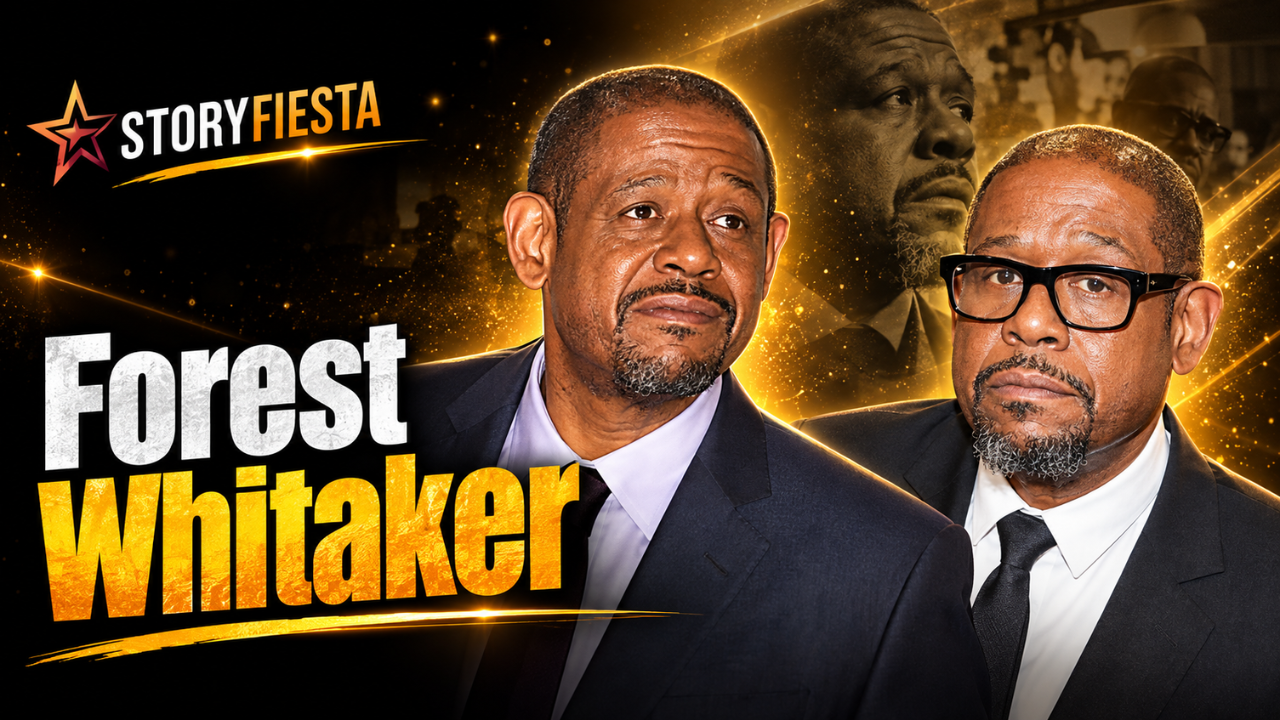
Forest Whitaker has built a significant public role in peacebuilding, education, conflict resolution, and community development through WPDI, UNESCO, and the United Nations.
His involvement goes beyond honorary titles. Official records document field visits, advocacy for children affected by armed conflict, work on sustainable development, and the creation of an organization that runs community programs in several countries. Whitaker has also explained in interviews how his upbringing, education, and encounters with former child soldiers shaped his approach to this work.
| Category | Details |
|---|---|
| Organization | Founder and CEO of the Whitaker Peace & Development Initiative |
| UNESCO role | Special Envoy for Peace and Reconciliation |
| UN work | Advocacy concerning children affected by armed conflict |
| WPDI focus | Peacebuilding, livelihoods, health and well-being, and community programs |
| Countries of action | France, Mexico, South Africa, South Sudan, Uganda, and the United States |
| Core approach | Education, local leadership, trust, and community-led solutions |
What Led Forest Whitaker Toward Peacebuilding
Whitaker has linked his commitment to education and conflict prevention to his upbringing. In a 2022 interview with The UNESCO Courier, he described growing up in a Los Angeles community where gang violence was part of the surrounding environment. He credited his parents with placing a strong emphasis on education and helping him access opportunities beyond his immediate neighborhood.
He discussed a related turning point in a 2006 Fresh Air interview. His parents arranged for him to attend school in Pacific Palisades rather than his local Compton high school. The commute exposed him to a markedly different environment, which he said broadened the way he understood the world.
A later experience in Uganda became particularly important to his humanitarian direction. Whitaker has said that meeting young people who had survived recruitment into armed groups affected him deeply. In a 2025 Forbes interview, he described those encounters with former child soldiers as part of what planted the idea that eventually developed into WPDI.
His own explanation centers on opportunity rather than pity. In later first-person writing, he described vulnerable young people as needing education, practical tools, and a chance to take greater control of their futures.
These experiences provide the clearest verified context for why education and youth empowerment became recurring themes in his peacebuilding work.
How WPDI Turned His Peace Work Into a Long-Term Organization
Since creating WPDI in 2012, Whitaker has remained at the helm, guiding the organization’s work as founder and CEO.
WPDI organizes its work around peacebuilding, livelihoods, health and well-being, sport, and community development. Its current country list includes France, Mexico, South Africa, South Sudan, Uganda, and the United States.
The organization describes a model built around training, education, local leadership, and community participation. Whitaker has repeatedly said that people living in conflict-affected communities need the tools to develop and sustain their own solutions.
WPDI also operates Community Learning Centers and conflict-resolution education programs. According to figures reported by the organization, its programs engaged more than 178,000 beneficiaries during 2025.
WPDI further reported that more than 13,498 students and teachers across 140 schools participated in Conflict Resolution Education, while more than 34,107 beneficiaries used its 15 Community Learning Centers. The organization also reported supporting more than 1,140 local businesses, including 210 newly established in 2025.
Those figures come from WPDI itself rather than from an independently verified impact assessment, so they are best understood as the organization’s reported program results.
How His UNESCO Role Developed
Whitaker’s institutional relationship with UNESCO began before WPDI was established.
UNESCO designated him Goodwill Ambassador for Peace and Reconciliation in 2011. UNESCO broadened Whitaker’s responsibilities in 2014 by appointing him Special Envoy for Peace and Reconciliation.
Through UNESCO, Whitaker has supported education, peacebuilding, conflict prevention, and youth opportunity in communities affected by violence.
Whitaker’s own explanation of peacebuilding has become increasingly centered on empowerment. In his UNESCO interview, he said that experience had taught him that many conflicts have highly local causes and that communities often lack the tools or opportunities needed to resolve them.
That led him toward an approach in which outside organizations are not supposed to dictate every solution. Instead, he emphasizes giving local participants the skills, resources, and support needed to help shape their own communities.
Education is central to that view. Whitaker has linked his belief in educational opportunity with his own childhood, when his parents made education a priority despite the violence surrounding parts of his neighborhood.
His UNESCO role therefore overlaps closely with WPDI’s broader focus: education is treated not simply as classroom learning, but as one tool for conflict prevention, youth participation, and long-term community stability.
What His UN Work Has Involved
Whitaker’s peacebuilding activity has also included formal work within the United Nations system.
According to the UN Office for Partnerships, Whitaker began working in 2014 with the UN office focused on children and armed conflict as an Advocate for Children Affected by War.
His involvement has included advocacy around the reintegration of young people affected by armed groups. Whitaker joined the Global Coalition for Reintegration of Child Soldiers steering committee in 2019.
Official UN records also document his participation in Security Council discussions concerning children and armed conflict. He addressed the Security Council on this issue in 2014 and again in 2021.
Another part of his UN record involves the Sustainable Development Goals. UN Secretary-General Ban Ki-moon appointed Whitaker to the Sustainable Development Goals Advocacy Group on January 19, 2016. António Guterres later included him in the 2019 group of SDG Advocates.
His current status requires an important distinction. Some older institutional and WPDI biographies still use language that can make the role appear active, but the current UN Office for Partnerships roster places Whitaker among the SDG Advocates Emeritus.
That makes the historical wording more accurate: he served as an SDG Advocate after appointments in 2016 and 2019 and is now listed by the UN as an emeritus member of that group.
Why the 2014 South Sudan Mission Matters
One of the clearest examples of Whitaker’s field-based institutional work came during a June 2014 mission to South Sudan.
He traveled with UNESCO Director-General Irina Bokova and Leila Zerrougui, then the UN Special Representative for Children and Armed Conflict. Their work included meetings with President Salva Kiir, displaced young people, and other conflict-affected participants.
During the mission, Whitaker advocated education, reconciliation, and protection for children caught up in armed violence. UNESCO records also document his support for the Children, Not Soldiers campaign.
The mission connected several strands of his public work that later became recurring priorities: education during instability, protecting young people, reintegration, and building local pathways toward reconciliation.
Whitaker later said the mission contributed to efforts to encourage the demobilization of children associated with armed groups. Contemporary UNESCO records clearly establish his participation, advocacy, and meetings, but they do not establish precisely how much responsibility he personally had for later releases.
The strongest verified point is therefore the documented role itself: he participated directly in an international mission focused on education, child protection, and reconciliation during an active period of conflict.
How Trust and Local Leadership Shape His Approach
Whitaker’s direct interviews offer more detail on how his peacebuilding ideas developed through years of practical work.
In the 2025 Forbes interview, he emphasized trust as a basic requirement for effective community programs. He described listening to communities, employing local people, and designing initiatives around actual local needs rather than importing solutions from outside.
That approach closely connects to his emphasis on empowerment. In his UNESCO interview, he explained that communities need the tools and opportunities to identify and address local problems themselves.
For Whitaker, education is part of that process, but it is not the only component. WPDI programs also incorporate entrepreneurship, conflict-resolution training, livelihood support, and access to community resources.
This approach gives local participants a central role in developing responses to local needs.
He has also spoken about personal habits that influenced his own thinking. In a 2018 interview with Condé Nast Traveler, Whitaker said reading and meditation had been part of his life for years and that much of his reading related to his humanitarian work. At the time, he also said he had incorporated meditation into aspects of WPDI’s life-skills programming.
Those remarks describe his practices at the time rather than establishing a fixed present-day routine, but they add first-hand context to how he has discussed reflection and personal development.
How WPDI’s Work Expanded in 2025 and 2026
Recent WPDI projects indicate that the organization has continued expanding its practical work around education, connectivity, conflict resolution, and economic opportunity.
On June 25, 2025, WPDI announced a three-year partnership with Intelsat designed to provide satellite connectivity to 10 Community Learning Centers. Seven centers were in South Sudan, and three were in Uganda.
The project was intended to improve access to online education, digital literacy, entrepreneurship training, and virtual exchanges. Whitaker described technology as a way to broaden educational opportunities for young people living in areas affected by conflict or limited infrastructure.
On November 13, 2025, WPDI reported that it and SES received the Changing Lives Award at the Africa Tech Festival for work connecting centers in South Sudan and Uganda with digital education.
Expansion continued in South Africa. On July 31, 2026, WPDI South Africa announced a partnership with the Cape Wine Auction Trust to extend Conflict Resolution Education into communities across the Cape Winelands, building on work already conducted in the Cape Flats.
Economic opportunity has remained another part of WPDI’s work. In September 2026, the organization reported that its partnership with SkinnyDipped in South Sudan had completed an initial three-year phase and had been renewed for another two years.
WPDI said the initiative had supported 431 women and contributed to the establishment of 224 businesses in Central Equatoria State. As with the organization’s broader impact statistics, those numbers are WPDI’s own reported program results.
Whitaker also continued to explain the principles behind these programs publicly. In a first-person statement published on September 21, 2026, for the International Day of Peace, he argued that peacebuilding should receive sustained investment before violence reaches a crisis point.
His emphasis remained consistent with the approach he has described in interviews: local leadership, education, dialogue, and giving communities practical capacity to address conflict before it escalates.
Forest Whitaker’s peacebuilding record is therefore supported by more than a single organization or honorary appointment. It includes creating WPDI, formal UNESCO responsibilities, documented UN advocacy, field involvement in conflict-affected communities, and recent programs focused on education, connectivity, entrepreneurship, and locally led conflict resolution.