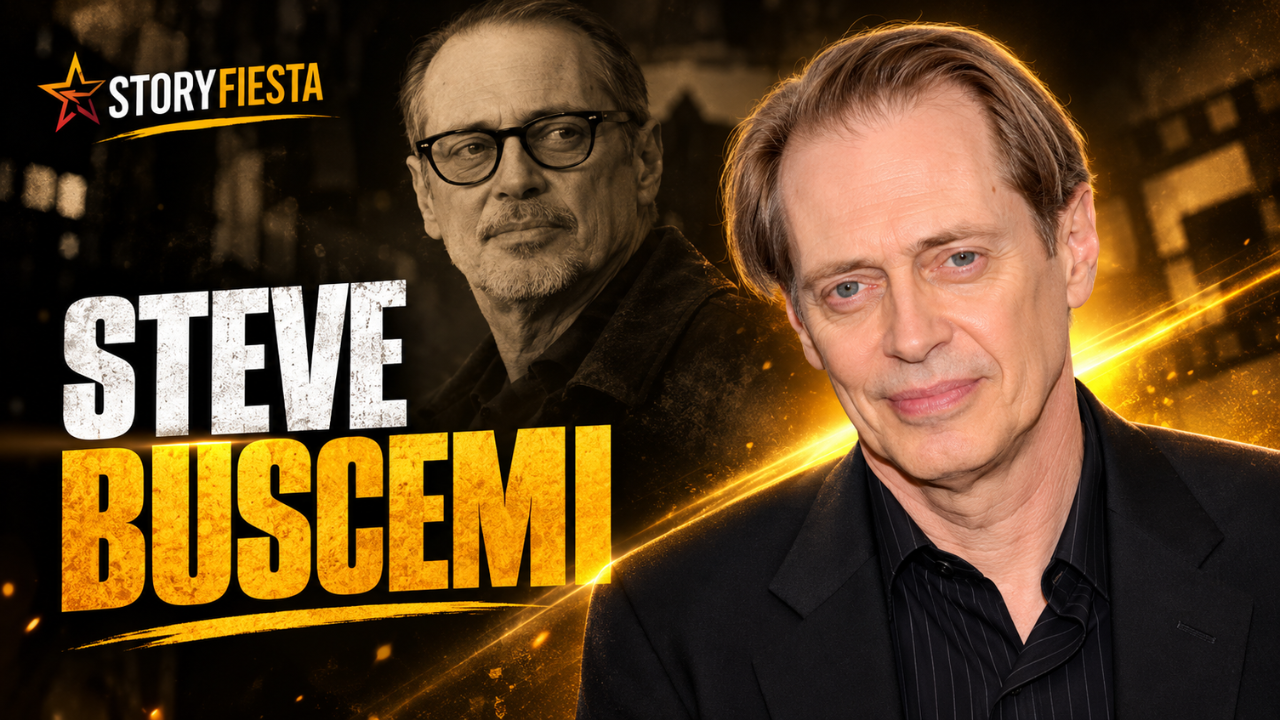
Steve Buscemi’s connection to the New York City Fire Department began long before his later public profile. He joined the FDNY in 1980 and spent about four years with Engine Company 55 in Lower Manhattan. Decades later, that experience remained important to his public life, particularly after he returned to work alongside firefighters following the September 11 attacks.
His connection with the fire service did not end with his departure from regular duty. Buscemi has spoken directly about the emotional effects of working at Ground Zero, the value he found in therapy, and the difficulty some first responders can face when seeking help. He has also maintained an ongoing relationship with Friends of Firefighters, which currently lists him on its Advisory Council.
| Category | Details |
|---|---|
| FDNY service | Former New York City firefighter |
| Firehouse | Engine Company 55 in Lower Manhattan |
| Length of service | About four years |
| 9/11 response | Joined Engine 55 members at the World Trade Center site |
| Current public role | Advisory Council member at Friends of Firefighters |
| Advocacy focus | Mental-health support for firefighters and their families |
How Steve Buscemi Became an FDNY Firefighter
Buscemi entered the New York City Fire Department in 1980. In his own account, the path began partly with advice from his father, who worked for New York City’s sanitation department and encouraged his sons to consider civil-service employment.
When Buscemi became eligible, a Fire Department examination was available. He took the exam and eventually joined the FDNY, where he was assigned to Engine Company 55 in Lower Manhattan.
He did not describe firefighting as a lifelong childhood ambition. Once he started the job, however, he came to value what it provided. He remained with the department for roughly four years.
His departure came as other professional commitments made it increasingly difficult to continue working FDNY shifts. Buscemi later recalled that he did not initially think of the decision as necessarily permanent and believed he might return.
Buscemi’s own accounts and organizational records identify his FDNY assignment as Engine Company 55, although some secondary accounts have incorrectly referred to it as “Ladder 55.”
What Engine 55 Meant to Him
Buscemi has described his time at Engine 55 as more than a job. In later interviews, he described the firehouse as a close community and said the work made him feel useful.
He also described the relationships among firefighters in family-like terms. That connection remained significant after he stopped serving as a full-time firefighter.
His comments about those years help explain why he continued returning to firefighter-related causes long after leaving regular FDNY duty. Rather than treating the job as an isolated part of his early working life, he has repeatedly spoken about the sense of belonging he found within the firehouse.
The habits associated with firefighting also stayed with him. In a later interview about fire safety, Buscemi said the experience left him attentive to hazards in everyday situations. He has described reminding people about practical measures such as functioning smoke detectors.
That is a narrower and more concrete effect of his former profession than a broad personality description: his training continued to influence how he thought about basic fire prevention even years after leaving the department.
Why He Returned After the September 11 Attacks
After the September 11, 2001 attacks, Buscemi returned to the firefighter community he had once worked alongside.
He said that on September 12, 2001, he brought his old firefighting gear, located members of Engine 55, and joined the work at the World Trade Center site.
His own accounts describe participating in the rescue-and-recovery operation for several days. In later recollections, he said he joined a bucket brigade and encountered the site’s difficult realities.
Buscemi has described working at the World Trade Center site for several days, or less than a week. His firsthand accounts do not establish exact shift lengths.
He has also described returning to Engine 55 during that period as emotionally significant. Although the circumstances were deeply distressing, reconnecting with firefighters gave him a familiar community during an extraordinary crisis.
His role at Ground Zero is therefore best understood as a return to a professional community he already knew rather than as a later symbolic association with the FDNY.
How Ground Zero Affected Him Personally
Buscemi has spoken openly about the emotional impact of his experience after leaving the World Trade Center site.
In a 2021 interview, he described dealing with depression, anxiety, difficulty making ordinary decisions, and symptoms he personally characterized as post-traumatic stress. These descriptions came directly from him and relate to how he remembered the period after working at Ground Zero.
He also said that he was already seeing a therapist when the September 11 attacks occurred. Having someone to discuss what he had experienced became useful after his time at the site.
Buscemi has connected that experience to the broader question of whether people accustomed to helping others are always comfortable asking for help themselves. In his account, firefighters and other first responders may find vulnerability difficult because their work places them in the role of protector.
His remarks have become an important part of his later involvement in firefighter mental-health support. They are grounded in his own experience rather than in an abstract public campaign.
Buscemi has also said that he originally returned to Ground Zero intending to help others but found that being around his former firefighter community helped him as well. The connection between the firehouse, the September 11 response and his later discussion of mental health has remained one of the clearest themes in his public comments on firefighting.
How He Became Involved in Firefighter Mental-Health Support
Buscemi’s later public work has emphasized access to mental-health services for firefighters and their families.
He has spoken in support of Friends of Firefighters, an organization that helps members of the firefighting community. His comments have focused especially on the value of confidential support outside the department’s formal structure.
Buscemi has said that some firefighters may hesitate to seek help even when they are struggling. He has argued that an independent setting can make it easier for people to talk about experiences they might otherwise keep to themselves.
His own use of therapy after Ground Zero gives that advocacy a direct personal context. Rather than discussing mental-health care only as a public issue, he has described finding it useful in processing his own experience after 9/11.
He has also said that his public visibility allows him to draw attention to services that firefighters may need. His involvement has included speaking about his own experience and supporting Friends of Firefighters and its services for the firefighting community.
In 2014, he also participated in a project centered on the experiences and pressures faced by New York firefighters. The project examined the responsibilities, risks, and psychological demands associated with FDNY work and gave him another way to address the profession he had once been part of.
His public comments about firefighting have focused on the pressures first responders face and the importance of having support available when they need it.
His Ongoing Role With Friends of Firefighters
Buscemi’s relationship with firefighter support work has continued well beyond the period immediately following September 11.
As of September 2026, Friends of Firefighters lists him on its Advisory Council and identifies him as a former FDNY firefighter. That role provides a clear connection between his earlier service and his ongoing public involvement.
His participation has also extended to fundraising and charity activity. BTIG officially listed Buscemi among expected participants in its annual Commissions for Charity Day in both 2025 and 2026.
For the May 2026 event, BTIG confirmed that Buscemi was expected to participate, while separate reporting identified Friends of Firefighters as the organization connected with his appearance.
His long association with firefighter causes is therefore supported by more than retrospective interviews about his earlier FDNY years. It includes a current organizational role and recent charity participation connected with firefighter welfare.
His current Advisory Council role with Friends of Firefighters frames that earlier FDNY experience as part of an ongoing commitment to firefighter support. His own accounts also explain why mental-health services became a meaningful part of that work. After Ground Zero, he described experiencing significant emotional difficulties and finding value in having someone with whom he could process them.