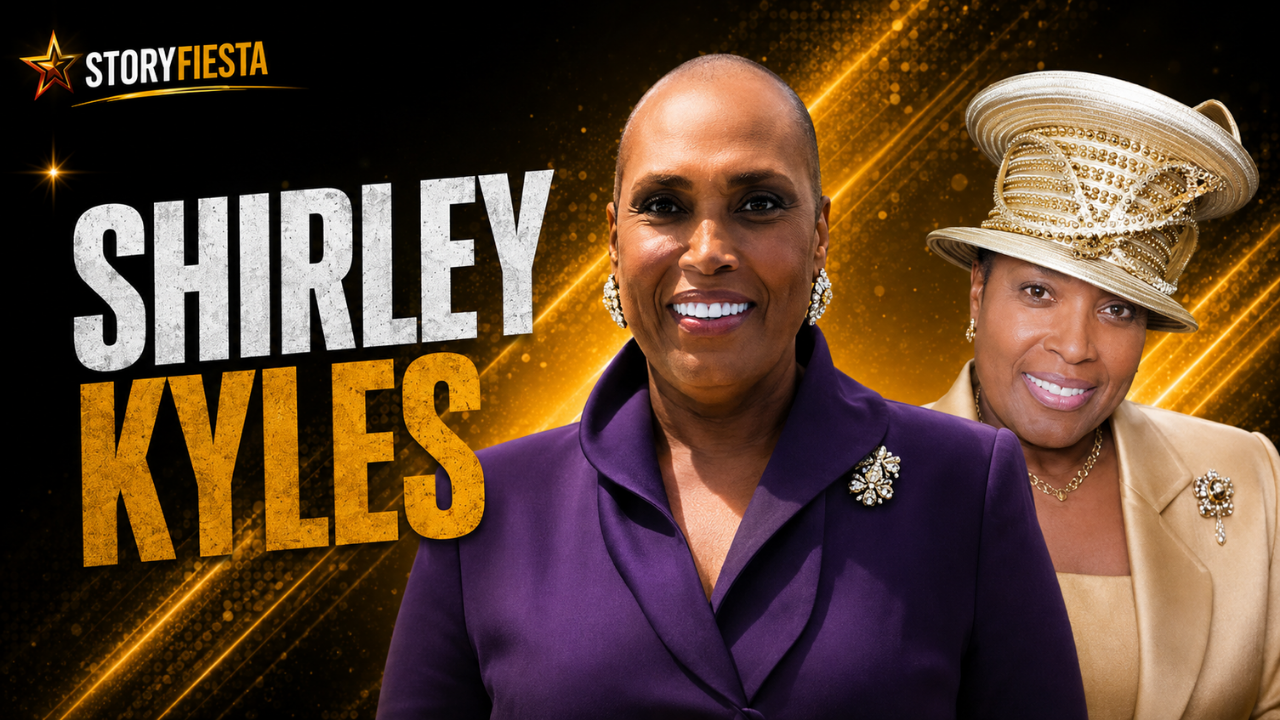
Shirley Kyles was a church administrator, mother of five, and domestic abuse survivor who gave a detailed public account of her experiences in 1995. Rather than presenting her story simply as a dispute with her former husband, she said she wanted to explain how she survived and help other people understand the effects of abuse.
Her documented history includes administrative and community work at a Memphis church, two divorce filings, raising three daughters as a single parent, and relying on faith during her recovery. A funeral-home notice records her full name as Shirley Cephas Kyles and confirms that she died in Mobile, Alabama, in 2023 at age 74.
| Category | Details |
|---|---|
| Full name | Shirley Cephas Kyles |
| Raised in | Chicago area |
| Family background | Daughter of a Baptist preacher |
| Children | Five, including Alva, Rubi, and Kora |
| Community contribution | Church administration and day-care development |
| Public work | Shared her experience to help domestic abuse survivors |
| Age at death | 74 |
Her Church Experience Supported Administrative and Community Work
Kyles grew up in the Chicago area as the daughter of a Baptist preacher. Her family background gave her experience with church organization, which later became relevant to her work in Memphis.
In 1976, she was serving at Mount Vernon Missionary Baptist Church when she met Albert “Al” Green. She later joined the administration of Full Gospel Tabernacle. According to her 1995 account, she helped establish the church’s organizational structure and contributed to creating a day-care center.
These responsibilities offer some of the clearest verified information about her work outside her family life. They involved practical administration and developing a service for children rather than merely a ceremonial role. However, the available research does not provide an independently preserved employment record, an exact formal title, or a complete description of her daily duties.
Kyles stopped working at Full Gospel in April 1977. The published account preserves some uncertainty about how that departure occurred: she said she wanted to leave, while the circumstances were also described as a dismissal. The surviving evidence does not fully clarify how she left, but her position ended in April 1977.
Claims about later professional qualifications are much less secure. No accessible institutional record confirms that she became a licensed counselor, public-relations professional, military officer, or leader of a registered advocacy organization. Her church administration and work at the day-care center remain the strongest documented parts of her professional background.
Her Marriage Ended After Divorce Filings and Separations
Kyles married Green in Memphis in June 1977. Some secondary records list different dates for the ceremony, so the available evidence supports the month and year rather than an exact date.
According to her later testimony, serious problems began almost immediately. She described repeated physical abuse during the marriage and said there were several periods when she left before returning. She filed for divorce in 1978 but later reconciled with her husband. A second filing followed in 1981.
Kyles explained that several pressures affected her decisions during those years. She worried about coping independently, trusted assurances that the violence would end, and dreaded going through another divorce. Her account directly explains why separation was not a single, uncomplicated decision.
The allegations were not recorded only in later biographical summaries. UPI reported on the divorce case in March 1981, and The Washington Post later examined the filings and sworn testimony in its extensive 1995 profile. That report stated that Green acknowledged under oath that he had struck his wife.
Their divorce became final in February 1983. Individual incidents remain sensitive and come primarily from Kyles’s statements and testimony, so they are best understood as parts of her documented account rather than retold for dramatic effect. The central verified point is that her allegations appeared in divorce proceedings and were accompanied by Green’s reported acknowledgment under oath.
Why Shirley Kyles Shared Her Experience in 1995
More than a decade after the divorce, Kyles gave an on-the-record interview that was published in January 1995. She said another widely reported domestic-abuse case had encouraged her to stop remaining silent about her own experience.
Her stated purpose was broader than recounting what had happened inside the marriage. She wanted her experience to help other survivors and to encourage abusers to understand the consequences of their actions. She also emphasized that her decision was not primarily intended to attack her former husband, who remained the father of three of her children.
Kyles placed the focus on survival. She wanted readers to understand what she endured, why she returned after leaving, and how she eventually moved forward. That distinction gave her interview a clear public purpose: it addressed the pressures that can keep someone in an abusive household without reducing those decisions to a simple question of why the person did not leave sooner.
Her comments about children were especially direct. Drawing from her own experience as a mother, she challenged the idea that staying in an abusive home is automatically best for a family. She believed that remaining solely for the children could communicate a damaging message and argued that their wellbeing could instead be a reason to leave.
The interview is the strongest source for Kyle’s perspective because it preserved her own explanations rather than relying on later retellings. Although some websites subsequently repeated parts of the story, her first-hand account and the contemporaneous reporting provide the soundest basis for understanding why she spoke publicly.
Faith and Motherhood Shaped Her Recovery
Kyles directly credited prayer and faith with sustaining her through the abuse and helping her recover afterward. Her religious background was not merely an incidental biographical detail; it helped explain how she endured a difficult period and found peace after the divorce.
By 1995, she was living in the Chicago area with Alva, Rubi, and Kora, the three daughters she shared with Green. At that time, the girls were reported as 16, 14, and 13. Kyles was raising them as a single parent and openly acknowledged that money was tight.
Her description of life after the marriage did not present recovery as effortless. She spoke of healing and peace while also dealing with the financial and practical responsibilities of supporting her daughters. Both realities were present in her account: leaving ended the marriage, but it did not remove the demands of parenting or create immediate financial security.
Kyles’s comments also reveal how motherhood influenced her later understanding of domestic abuse. Earlier, concern about another failed marriage and uncertainty about managing independently had contributed to her returning. By 1995, she had reached a different conclusion about what children learn from an unsafe home.
These statements document a change in perspective without requiring assumptions about her personality. She did not describe herself through broad labels. Instead, she identified the fears that had affected her choices, the beliefs that supported her recovery, and the responsibilities she carried afterward.
Her Verified Family Background
The best-documented part of Kyles’s immediate family concerns her three daughters with Green: Alva, Rubi, and Kora. A 1995 report placed the three daughters with their mother in the greater Chicago area.
Kyles was already a mother of two before her later marriage. Members of her family, including those older children and her sisters, supported her account of events during the later marriage. The available research does not identify the two older children by name, so the verified record cannot establish further claims about their identities or lives.
One of her sisters was identified as Lucille Watson. Watson traveled from Chicago to assist Kyles during a health crisis in 1977. Other sisters were mentioned but not named in the strongest available reporting.
Reliable sources do not establish the later occupations, marriages, finances, or personal circumstances of Kyles’s children. Claims that one daughter entered a particular profession also lack sufficient authoritative confirmation. Her family record is therefore clearest when limited to the five children, the names of the three daughters she shared with Green, and the support she received from her sisters.
Shirley Kyles Left a Documented Survivor-Focused Message
Shirley Kyles developed a documented public identity separate from her previous marriage. She contributed to church administration, helped develop a day-care center, was a mother of five, and eventually used her own experience to address the realities of domestic abuse.
Her 1995 testimony became the most significant publicly recorded part of her advocacy. She explained why leaving had been difficult, described the role faith played in her recovery, and challenged the belief that remaining in an abusive household necessarily protects children. Her purpose, expressed in her own words, was to help survivors and increase understanding of abuse’s consequences.
Christian Benevolent Funeral Home recorded that Shirley Cephas Kyles died in Mobile, Alabama, on July 17, 2023, at age 74. The available evidence does not support many of the career, education, military, financial, or social-media claims later attached to her name. What remains verifiable is a focused account of community work, motherhood, survival, and a deliberate decision to speak so that her experience might help others.