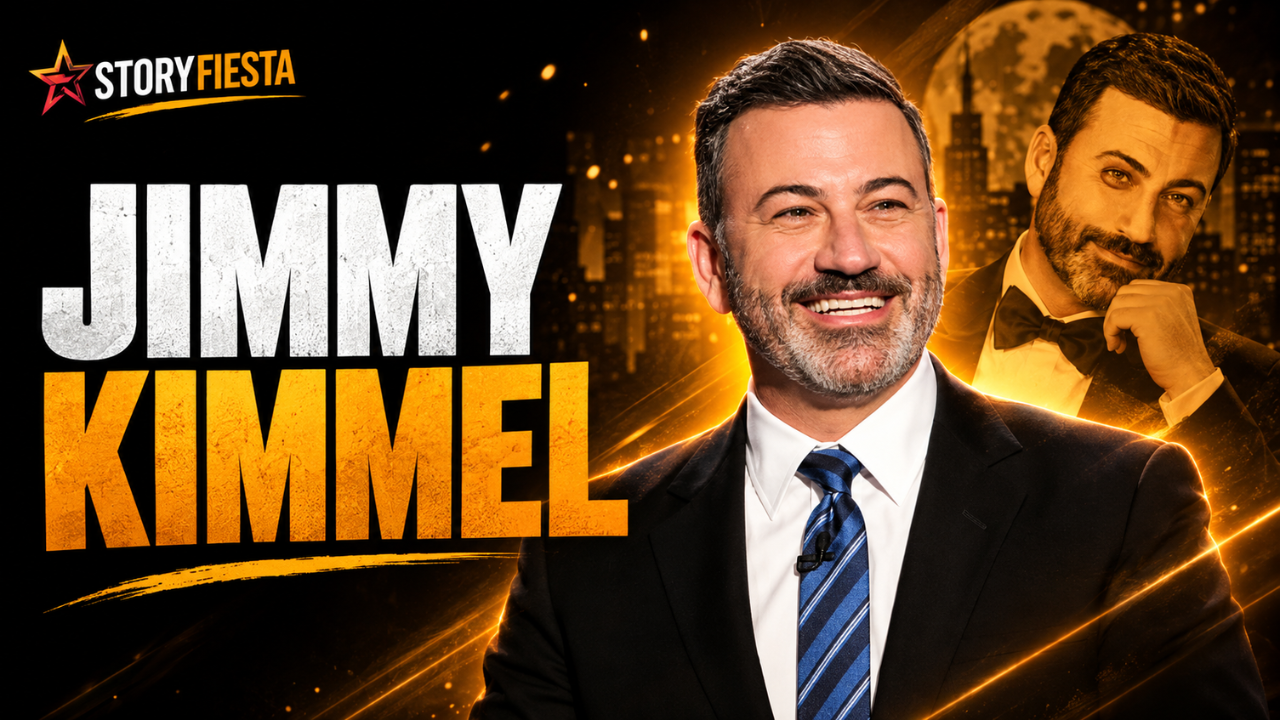
Jimmy Kimmel built his broadcasting career long before becoming a familiar late-night television host. He spent roughly 12 years working in local morning radio before moving into television. This change eventually led to hosting, writing, executive production, game-show work, and a long-running nightly program.
His career has continued to develop rather than settling into a single role. Institutional records show recognition for his hosting work. At the same time, direct interviews reveal that he remains closely involved in shaping his monologues and has repeatedly considered what comes after late-night television. His public work has also extended into healthcare advocacy following a serious medical experience involving his son.
| Category | Details |
|---|---|
| Professional roles | Television host, writer, producer and comedian |
| Career foundation | Roughly 12 years in local morning radio |
| Current responsibilities | Host and executive producer across major television programs |
| Emmy record | 31 individual nominations and five wins |
| Public advocacy | Healthcare coverage for children and families |
| Creative work | Author and illustrator of a children’s book supporting children’s hospitals |
How His Radio Years Shaped His Broadcasting Career
Before television became central to his public career, Jimmy Kimmel spent roughly 12 years in local morning radio. ABC’s biography records work in several US markets, including Las Vegas, Phoenix, Seattle, Tampa, Palm Springs, Tucson, and Los Angeles.
Radio was not simply an early job before a planned television career. Kimmel said in a 2025 interview that becoming a disc jockey had originally been his professional ambition. He also said that, had he found the right radio position in Las Vegas, his career might have taken a very different course.
That background helps explain why broadcasting came before television fame in his professional chronology—his early years centered on live radio rather than a deliberate plan to become a television personality.
How He Made the Transition From Radio to Television
Kimmel has identified Win Ben Stein’s Money as his first television job. The move marked a clear break from the local-radio career that had occupied much of his earlier professional life.
He has not described his transition as part of a long-established television plan. Looking back, he said the career that followed went far beyond what he had initially imagined.
The new medium nevertheless gave him a wider national platform and established him as a television host before he entered late-night broadcasting. By the early 2000s, his professional identity had expanded well beyond the radio work that had started it all.
How He Became a Long-Running Late-Night Host and Producer
His late-night program premiered on 26 January 2003, beginning the long-running phase of his career that continues through 2026. He continues to serve as both host and executive producer.
His role extends beyond delivering material prepared by others. During a 2026 profile, he was observed working with writers in a shared document and personally revising monologue material before it reached the stage.
Kimmel also described the tone he seeks in those monologues as “assertive but reasonable.” That comment offers a first-hand description of how he thinks about the writing rather than requiring an outside interpretation of his style.
The program has now been part of his career for more than two decades. The program began in January 2003 and remained active in 2026, more than two decades after its premiere.
How His Professional Role Expanded Beyond Late Night
Kimmel’s current television work extends beyond his nightly program. He also hosts and executive produces a major game show for ABC.
The Television Academy records 31 individual Emmy nominations and five wins for him through 2026. Those totals refer to his individual record rather than program-level nomination counts.
His game-show hosting brought particularly recent recognition. He won the Emmy for Outstanding Host for a Game Show in both 2025 and 2026.
These responsibilities place hosting and executive production alongside his long-standing late-night work. Rather than representing a complete departure from that role, the game-show work became another continuing part of his television career.
StoryFiesta has also profiled Andy Samberg, whose television-comedy career likewise expanded into producing alongside his on-screen work.
How Family Experience Led to Public Healthcare Advocacy
A significant change in Kimmel’s public work followed the birth of his son Billy in April 2017. Billy was diagnosed with tetralogy of Fallot with pulmonary atresia and required open-heart surgery shortly after birth, according to Kimmel’s own account and Children’s Hospital Los Angeles.
Kimmel discussed the experience publicly on his program and used it to speak about healthcare coverage, pre-existing conditions, and access to treatment for families dealing with serious medical needs.
Children’s Hospital Los Angeles later described him as an advocate for healthcare coverage for children and families. The hospital also documented the attention his public comments generated on the issue.
His family experience later connected with another public project. Kimmel wrote, illustrated, and hand-lettered the children’s book The Serious Goose, which was published in 2019. Penguin Random House stated that his proceeds were intended for Children’s Hospital Los Angeles and other children’s hospitals.
Kimmel said the idea for the book came from a playful routine involving his daughter Jane, making it a clear example of a family experience developing into a public creative project.
Why Retirement Has Become an Ongoing Career Question
Kimmel has spoken about leaving late-night television several times, but those remarks have not amounted to a confirmed retirement plan.
In 2023, he said he had been very intent on retiring before the writers’ strike interrupted production. The period away from work changed how he viewed continuing with the program.
A year later, he spoke about another part of the decision: uncertainty over what he would do after late-night television. He said that concern had contributed to his willingness to keep renewing his contract.
His comments had developed further by 2026. Kimmel said he wanted to handle the program’s eventual end responsibly and discussed the effect such a decision would have on the people who work with him.
That makes retirement a recurring question in his recent career, not a settled event. His public statements show serious consideration of leaving, but he has not confirmed a date.
Where His Late-Night Career Stands in 2026
The program went through an unusual interruption in September 2025. ABC suspended it on 17 September and reinstated it on 23 September after discussions with Kimmel.
The broader reasons surrounding that decision became contested. ABC said the production had been paused during an emotionally charged situation, while political and affiliate pressure also entered the public debate. The suspension itself and the program’s return are facts, but accounts of what ultimately drove the decision differ.
Kimmel’s first episode back drew about 6.3 million broadcast viewers, according to Reuters, substantially above the program’s preceding quarterly average. ABC also reported nearly 26 million social-media views for the return monologue. Those figures came from an exceptional event-driven episode rather than representing normal audience levels.
His contractual position became clearer later that year. In December 2025, Kimmel and Disney agreed to a one-year extension that runs through May 2027.
As of October 2026, the program remained active, but no further extension, retirement announcement, or confirmed cancellation beyond May 2027 had been made public. He continues to host and produce the program while discussing the possibility of eventually leaving late-night television, with no confirmed decision beyond his current contract.