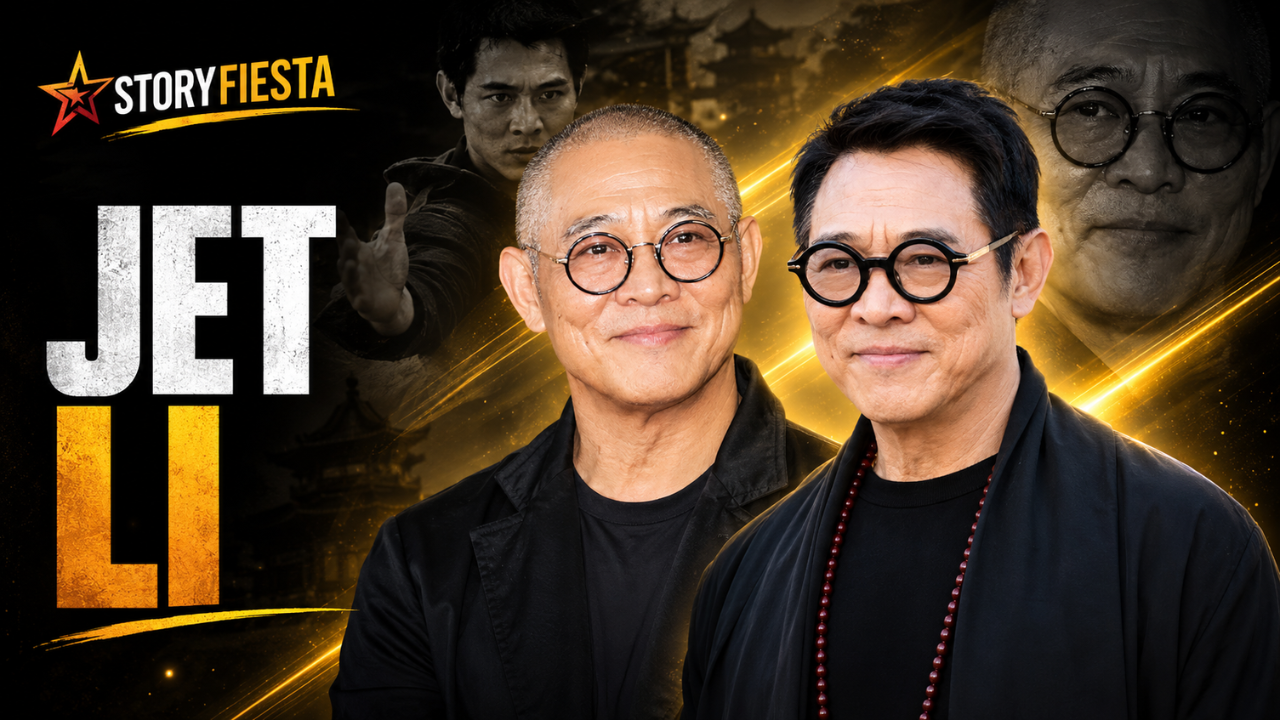
Jet Li’s public record extends well beyond the fame most people associate with his name. Before becoming widely known internationally, he had already built an exceptional competitive wushu record, including five consecutive adult national all-around championships. He later spent 18 years representing wushu internationally and developed a substantial record of charitable and public-health work.
A major turning point came after he and members of his family survived the 2004 Indian Ocean tsunami in the Maldives. Li has said the experience changed how he thought about mortality and about postponing charitable ambitions. That shift eventually became closely connected with the creation of One Foundation, while his later public work increasingly explored mental training, Buddhism, awareness and personal development.
| Category | Details |
|---|---|
| Competitive background | Five consecutive adult national all-around wushu championships |
| National record | More than 50 national gold medals |
| Wushu role | First IWUF Wushu Image Ambassador |
| Philanthropy | Founder of One Foundation |
| Public-health work | Appointed a WHO Goodwill Ambassador |
| Recent publication | Author of Beyond Life and Death: The Way of True Freedom |
His Competitive Wushu Record Came Before International Fame
Jet Li began intensive wushu training at about eight years old and joined the Beijing Wushu Team at eleven. His official biography says he won the All-China Youth Championships at that age, establishing a competitive record at a young age.
His later senior achievements are more clearly documented. From 1975 through 1979, he became the adult all-around champion at the All-China National Championships for five consecutive years. Both his official biography and the International Wushu Federation credit him with more than 50 national gold medals across individual and all-around events.
A small distinction is worth keeping in mind when describing his earliest championship. His official website says he won the All-China Youth Championships at eleven. At the same time, promotional material from Penguin Random House describes him as the youngest national martial-arts champion at twelve. The two descriptions may refer to different levels of competition, so the exact age attached to his first ‘national championship’ is not fully consistent across the available accounts.
His competitive background is central to understanding his later public work. Wushu was not simply a subject he became associated with after becoming famous; it was already a major part of his life before his broader international recognition.
Jet Li Spent 18 Years Promoting Wushu Internationally
The International Wushu Federation appointed Li as its first Wushu Image Ambassador in 2007. He remained in that position until October 2025, giving him an 18-year formal connection with the international governing body.
His role included participation in major events intended to promote wushu internationally. One documented example came on August 18, 2011, when he took part in a wushu exhibition at United Nations Headquarters built around themes of peace, friendship, and health. IWUF also records his involvement in another United Nations-related wushu event in 2017.
His long tenure ended in October 2025. Wu Jing succeeded him as Wushu Image Ambassador, while IWUF gave Li the honorary designation “Lifelong Volunteer for Wushu Promotion, No. 001.”
His competitive career and his 18-year ambassador tenure represent two distinct parts of his documented involvement with wushu: first as a national-level competitor and later as an international advocate.
The 2004 Tsunami Changed How He Viewed Public Service
On December 26, 2004, Li and members of his family were caught in the Indian Ocean tsunami while vacationing in the Maldives. He has discussed the experience repeatedly in first-person interviews and later writing.
Before the disaster, he said he had imagined completing his personal goals first and devoting more time to helping others after retirement. Surviving the tsunami changed that assumption. In a 2026 interview, he explained that the experience forced him to confront the possibility that a person might never reach the future point when they planned to begin meaningful charitable work.
Li has also described being moved by how people helped one another during the disaster without first asking about nationality or background. In his own account, that experience became part of a broader change in how he thought about service and human connection.
The tsunami is therefore relevant to his later charitable work because Li himself has identified it as a turning point. It would be inaccurate, however, to treat the event as the beginning of every major personal belief associated with him. His interest in Buddhism, for example, had started much earlier.
One Foundation Grew From a 2007 Initiative Into an Established Charity
Li began the charitable initiative that became One Foundation in 2007. The project initially operated in cooperation with the Red Cross Society of China rather than starting immediately as the independent organization it is today.
Its institutional development took place in stages. A Shanghai foundation connected with the initiative was registered in 2008. The Shenzhen One Foundation was then formally registered on December 3, 2010, with independent public-fundraising status. The organization’s charter identifies Jet Li as its founder.
One Foundation describes its main areas of work as disaster relief, child care and development, and support and innovation within the wider public-welfare sector. Those priorities gave the project a broader purpose than one-time emergency response.
The organization remained active well after its early formation. In its 2025 report, One Foundation said it spent about RMB 526.7 million on charitable programs and carried out 72 emergency responses. It also reported working with more than 1,100 social organizations and charitable teams, alongside large numbers of volunteer and beneficiary participations.
Those figures belong to One Foundation as an institution, not to Li personally. The organization identifies him as its founder, but its 2025 results do not attribute every modern program or emergency response to his personal management.
One Foundation developed in stages rather than beginning as one unchanged legal organization in 2007. It started as an initiative, passed through a Shanghai organizational stage, and later became formally registered in Shenzhen.
His Humanitarian Work Expanded Into Public Health Advocacy
Li’s public-service work also reached international health organizations. The World Health Organization appointed him a Goodwill Ambassador on April 3, 2009.
His role included advocacy related to emergency public-health response and mental health. His first official WHO activity was connected with World Health Day in Beijing on April 7 of that year.
The appointment fits naturally with the concerns he had already expressed after the tsunami. Disaster preparedness, emergency response, and mental well-being became part of his documented public advocacy rather than remaining limited to his own charitable organization.
United Nations and WHO records place his appointment on April 3, 2009, even though the currently accessible WHO archive page carries a later webpage date.
WHO’s current ambassador materials do not list Li, so his 2009 appointment is best described as a historical role rather than a confirmed current position in 2026.
His work around wushu also intersected with health-oriented public events. The 2011 United Nations exhibition, for example, connected martial arts with peace, friendship and health, extending his public role beyond competition itself.
His Later Public Work Connects Wushu With Mental and Spiritual Development
Li’s later public discussions increasingly connect physical training with questions about the mind, awareness, aging and personal development.
His involvement with Buddhist thought developed over decades. In a 2026 interview, he recalled early exposure to Buddhist settings while spending time around temples in the 1980s. His official biography identifies 1997 as an important period of deeper study, while his publisher describes roughly three decades of Buddhist practice.
That chronology is important because it predates the 2004 tsunami. The disaster may have intensified his thinking about mortality and service, but his own account places his spiritual interest much earlier.
Li also distinguishes martial arts from Buddhist practice rather than treating them as interchangeable. He has described martial-arts training as a process that initially involves recognizing weaknesses, improving skill, and becoming stronger. His explanation of Buddhist practice moves in a different direction, toward understanding suffering and loosening the need to define oneself through achievement.
In recent interviews, he has also emphasized the difference between training the body and training the mind. He has said that physical conditioning alone does not guarantee happiness and that mental development deserves deliberate attention, too.
His description of his own daily practice is similarly specific. Rather than presenting spiritual practice only as formal meditation, Li said in 2026 that he tries to maintain awareness during ordinary activity, including work and conversation. He also acknowledged that he cannot maintain that awareness continuously.
Aging has become another subject he discusses openly. He has described getting older as a normal part of life and has said he places more importance on a person’s internal state than on trying to preserve a youthful appearance. Those comments reflect his philosophy rather than evidence of his physical health.
Li brought many of these themes together in Beyond Life and Death: The Way of True Freedom, published on May 5, 2026 by Tarcher/Penguin Random House. The book draws on his experiences with martial arts, philanthropy, Buddhist practice, mortality, and personal growth.
He continued to discuss these subjects publicly through 2026. In July, he spoke with Lion’s Roar about awareness, Buddhism, aging and the relationship between spiritual practice and martial arts. On August 29, he appeared on The Daily Stoic to discuss inner peace, ego, mortality and his changing understanding of strength.
Li’s public work has developed from competitive wushu and international martial-arts advocacy into philanthropy, public-health work and later discussions of mental and spiritual development. His national championships, long IWUF tenure, and founding of One Foundation provide the clearest documented milestones in that progression.
A closely related example is Jackie Chan’s humanitarian advocacy, which also combines martial-arts prominence with charitable work and an international Goodwill Ambassador role.