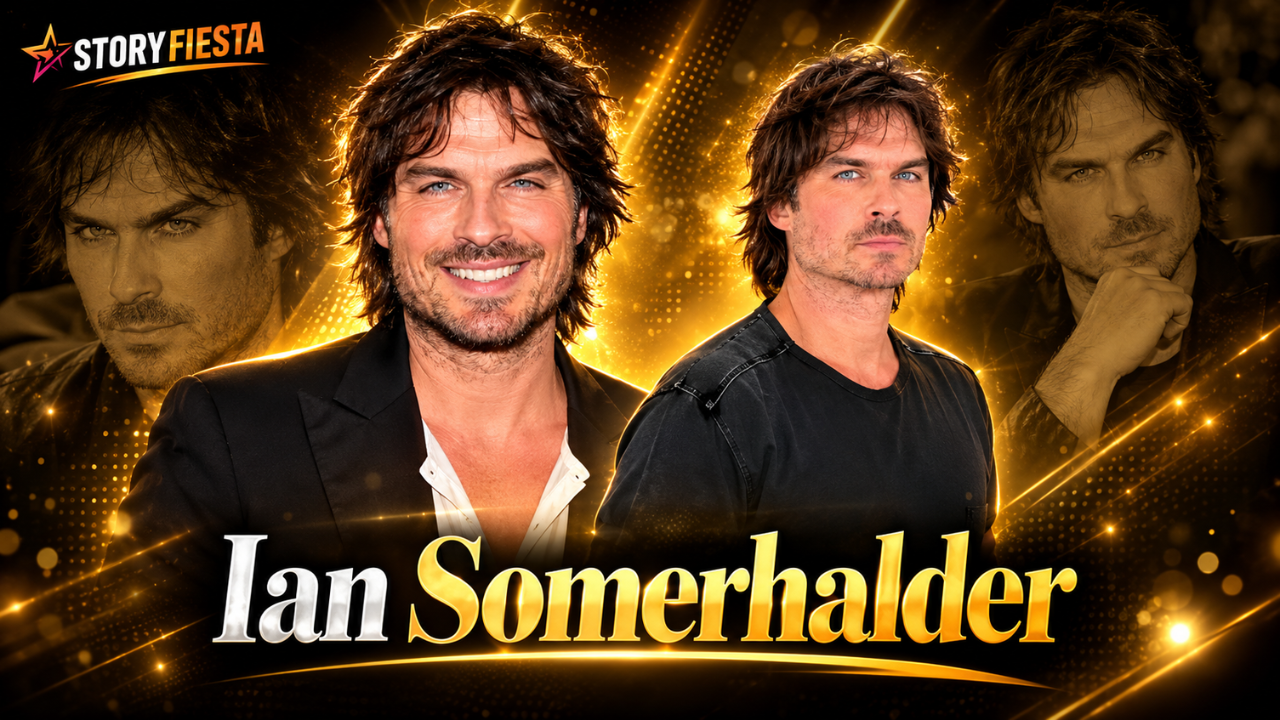
Ian Somerhalder’s public work has increasingly centered on environmental issues, regenerative agriculture, food systems, entrepreneurship, and family priorities. His environmental involvement is not new: the Ian Somerhalder Foundation dates to 2010, and the United Nations Environment Program has documented his conservation work and former role as a Goodwill Ambassador.
More recent interviews give a clearer picture of where his attention has moved. By 2026, Somerhalder was speaking publicly about soil health, regenerative farming, food production, and projects designed to bring those subjects to wider audiences. His business activities have also begun to intersect with that agricultural focus.
| Category | Details |
|---|---|
| Environmental organization | Ian Somerhalder Foundation |
| Former institutional role | UNEP Goodwill Ambassador |
| Current environmental focus | Regenerative agriculture and soil health |
| Business role | Co-founder of Brother’s Bond Bourbon |
| Documentary role | Executive producer on environmental projects |
| Environmental response work | Participated in Deepwater Horizon response efforts |
Why Ian Somerhalder Changed His Professional Priorities
Somerhalder has described a significant change in how he chooses to spend his professional time. In an October 2024 interview with PEOPLE, he said his priorities had increasingly shifted toward family, companies, food-related work, and environmental projects.
His comments also emphasized the practical effect of family responsibilities. Extended professional commitments had become less appealing as he focused more on raising his children and developing projects that could fit into a different kind of daily life.
By July 2026, he was describing regenerative farming and food-system work as a major part of what he considered his next professional chapter. His statements point to a gradual change in professional priorities.
How Environmental Work Became a Long-Term Public Focus
Somerhalder’s organized environmental work dates back to at least 2010, when he launched the Ian Somerhalder Foundation. UNEP describes the foundation as supporting conservation, environmental education, green-energy development, awareness of deforestation, and animal-welfare initiatives.
UNEP also records his participation in environmental response efforts following the Deepwater Horizon oil disaster in 2010. Its profile says his involvement included work connected with affected wildlife and public awareness.
His relationship with UNEP later developed into a formal ambassador role. The organization’s current profile lists him as a Global Goodwill Ambassador from 2012 to 2019, although UNEP’s own formal designation announcement is dated June 5, 2014. The institutional records therefore differ on the exact starting point.
Both records make clear that environmental advocacy had become an established part of his public work well before his more recent focus on farming and soil health.
How Regenerative Agriculture Became Central to His Current Work
Regenerative agriculture has become one of the clearest themes in Somerhalder’s more recent public work.
In a June 2026 CNN interview, he discussed the subject through practices such as planned grazing, maintaining living plants, supporting soil microorganisms, and improving how agricultural land functions. His comments placed soil health at the center of his environmental interests.
A July 2026 interview added more context. Somerhalder spoke about farming and food systems as areas where he now wants to direct substantial attention. Rather than treating environmental advocacy as a separate public campaign, he increasingly connects it with food production and agricultural practices.
His current work therefore extends beyond general environmental messaging. The focus has narrowed to how land is managed, how food is produced, and how regenerative approaches can enter broader public discussion.
How Documentary Producing Expanded His Environmental Role
Environmental production became another way for Somerhalder to work on the same issues.
He has held executive-producer responsibilities on projects centered on soil health and regenerative agriculture, extending his environmental work into documentary production and public outreach.
That involvement continued through 2025 and 2026. In April 2025, he participated in an Earth Day discussion connected with projects focused on regenerative agriculture. In June 2026, CNN identified him as an executive producer during an interview focused on regenerative agriculture and his current documentary work.
This progression is notable because his production has become closely linked to the subjects he discusses publicly. His environmental work now also includes helping develop and promote projects built around agricultural and food-system questions.
How Farming and Business Became Connected
Somerhalder’s entrepreneurial work has also connected with regenerative agriculture.
He co-founded Brother’s Bond Bourbon with Paul Wesley, and the company states that the brand launched in May 2021. Its official history says selected products began incorporating regeneratively grown grain in 2024.
The company also says that part of its proceeds supports regenerative-farming initiatives. Those statements come directly from Brother’s Bond, so they document the company’s stated approach rather than providing an independent measurement of environmental impact.
For Somerhalder, the business represents another point where agriculture, entrepreneurship, and environmental interests meet. His recent public work increasingly places those areas alongside each other rather than treating them as unrelated projects.
How Family and Farm Life Influenced His Priorities
Family considerations have directly shaped Somerhalder’s changing professional priorities.
In a 2022 interview, he described building a quieter farm-based life with Nikki Reed that placed greater emphasis on nature and daily routines. He said years of extensive professional travel had contributed to his preference for a different pace.
He has also said raising children changed how he evaluates professional commitments. By 2024, he was openly linking his work choices to his desire to spend more time with his family and focus on longer-term projects involving food, farming, and environmental issues.
Somerhalder has described a relatively simple personal routine built around whole and local foods, movement, sleep, meditation, and time with people important to him. He has specifically identified transcendental meditation as one practice he uses to stay centered.
His business experience has influenced those priorities as well. In the same 2022 interview, he described an earlier failed investment that, according to his own account, created an eight-figure financial problem for him and Reed. He said the experience changed how he thinks about risk and made him more deliberate when evaluating business ventures.
What His Recent Interviews Reveal About His Second Career Phase
By 2026, Somerhalder described agriculture and food systems as central rather than secondary interests.
His June 2026 CNN interview focused heavily on regenerative agriculture, soil health, and the relationship between agricultural practices and environmental goals. A month later, he used a longer interview to explain why his professional attention had moved toward farming, food production, and related projects.
Those comments fit a longer chronology. His foundation dates to 2010, UNEP documented his environmental work years ago, and regenerative agriculture later became a more specific focus. Business projects, farm life, family priorities, and environmental production have gradually converged around that direction.
His recent interviews clarify that regenerative agriculture has become a central professional priority, while the foundation and UNEP records place that work within an environmental commitment dating back to 2010. What has changed most is the form of that involvement: farming, entrepreneurship, and documentary production now sit alongside the advocacy work he began years earlier.