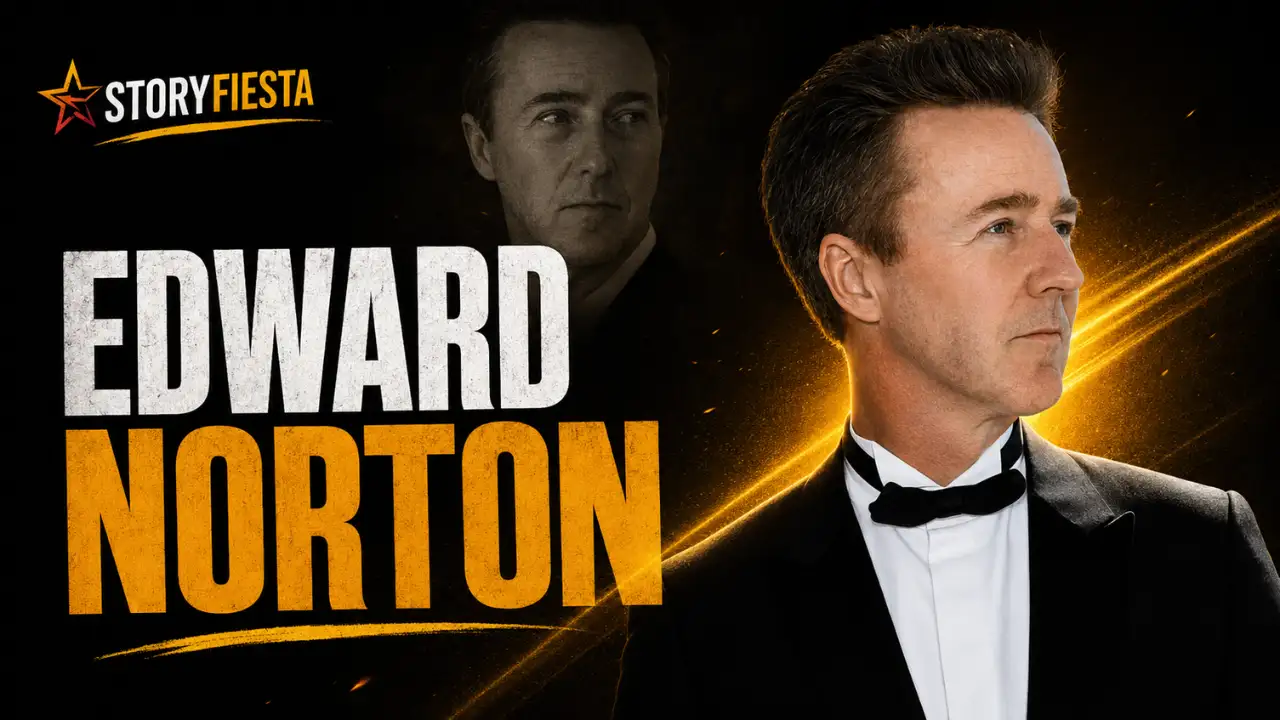
Edward Norton is widely known for acting, directing, writing, and producing, but his public work also extends into conservation, affordable housing, and community development. Official records connect him with the Maasai Wilderness Conservation Trust, Enterprise Community Partners and the United Nations.
A consistent principle runs through that work. Norton has argued that environmental protection cannot be separated from poverty, economic stability or the needs of people living near threatened ecosystems. His conservation strategy gives local communities a direct role in planning, rather than viewing their needs as a barrier.
That position developed partly through his upbringing. Norton has directly credited his father’s environmental work and their outdoor experiences together with shaping how he understands nature. Those early lessons later informed his involvement with projects that connect ecological protection with practical community benefits.
Conservation Shaped by Early Family Influence
Norton has said that most of what he knows about environmental conservation came from his father, who worked in the field for decades. He grew up listening to his ideas while also encountering natural landscapes firsthand.
Camping, hiking, and river rafting were regular parts of that experience. Norton recalled that his father introduced him and his siblings to wild places while explaining the pressures those environments faced. The combination gave him both a personal connection to nature and a practical way of thinking about its protection.
His father’s influence went beyond an appreciation of the outdoors. According to Norton, he emphasized that emotional appeals alone would not protect ecosystems when governments and communities were also dealing with urgent economic needs. Law, science and economics therefore became important parts of the conservation discussion.
That framework remained visible in Norton’s later advocacy. He has spoken about the intrinsic value of nature, but he has also argued that conservation must make sense within the social and financial realities people face.
Moving Beyond People Versus Nature
Norton rejects a simple conflict between human needs and environmental protection. In his view, conservation becomes more durable when it addresses both.
He has argued that many people cannot focus on distant environmental threats when they are struggling with poverty or immediate community problems. A workable model must explain how healthy ecosystems contribute to livelihoods, stability and long-term economic security.
That does not mean reducing nature entirely to its financial value. Norton has said that the emotional and spiritual importance of natural landscapes remains real. His point is that those arguments have not always been strong enough to change behavior across governments, industries and entire societies.
He instead places environmental health alongside economic and social well-being. Environmental damage can carry hidden financial consequences that traditional markets often fail to recognize. Sustainable management, by contrast, can protect resources on which communities and businesses depend.
This position also affects how Norton speaks about environmental organizations. Rather than asking people to choose between conservation and development, he supports arrangements in which responsible use of natural resources strengthens local communities.
Leadership with the Maasai Wilderness Conservation Trust
The Maasai Wilderness Conservation Trust currently identifies Norton as president of its U.S. board. The organization works in Kenya’s Chyulu Hills, within the wider Amboseli–Tsavo ecosystem.
Its model connects biodiversity protection with direct benefits for Maasai communities. Official information from the Trust describes work involving conservation, health, education, livelihoods and ecotourism. Those areas are treated as connected parts of one strategy rather than separate concerns.
Norton became interested in the organization because its approach addressed the needs of people living within the ecosystem. He explained that older conservation models often relied on drawing boundaries around valuable landscapes and restricting human activity. The Trust pursued a different course by working with Maasai communities whose land and decisions play an essential role in the area’s future.
Wildlife protection provides a clear example of the challenge. Norton has supported conservation models intended to make living wildlife more economically valuable to local communities than its destruction.
His position on the U.S. board is officially confirmed, although the Trust does not state when he assumed its presidency or quantify his current workload. Its organizational structure also makes clear that he works alongside Maasai leaders, conservation specialists and other board members rather than operating the programs alone.
Building Local Capacity for Lasting Conservation
Norton has identified local capacity-building as one of the most important investments large conservation organizations can make. His emphasis is on helping community-based groups develop the knowledge and resources to manage their own environmental priorities.
That approach keeps decision-making close to the people most affected. Communities living within critical ecosystems understand local pressures, but they may need institutional, technical, or financial support to build sustainable programs.
Norton has called for a wider network of capable local organizations that can help residents design a better relationship with surrounding natural resources. Outside groups can contribute expertise and funding, but solutions still need to work within local economic and social conditions.
His comments also recognize that not every environmental problem has an easy market-based answer. Some landscapes and species require direct protection, particularly where the risks are urgent. Economic incentives can support conservation, but he has not presented them as a complete solution for every situation.
The Trust’s work fits the broader model he has described publicly. Its work pairs ecosystem protection with community programs, ensuring Maasai development remains part of the wider conservation strategy.
Using Public Visibility to Support Biodiversity
On July 8, 2010, United Nations Secretary-General Ban Ki-moon appointed Norton a UN Goodwill Ambassador for Biodiversity. The appointment gave formal recognition to environmental work that had become a substantial part of his public activity.
At the announcement, Norton explained that he hoped to redirect some of the attention generated by his acting career toward biodiversity loss caused by human activity. He wanted that visibility to increase public awareness and encourage political leaders to respond.
The role connected his public profile with an international environmental issue. Biodiversity loss crosses national borders, while decisions affecting habitats, wildlife and natural resources are often made at local or national levels. A goodwill ambassador can help bring those subjects before audiences that may not normally follow environmental policy.
The original appointment is preserved in official United Nations records. The Maasai Wilderness Conservation Trust’s current leadership page also continues to identify Norton with the UN title.
In discussing environmental change, he has emphasized regulation, financial incentives, local organizations and institutional accountability.
Community Development Beyond Environmental Work
Norton’s involvement with community development is not limited to wildlife or rural ecosystems. Enterprise Community Partners identifies him as a lifetime trustee and reports that he has served as a trustee since 1998.
The organization works in affordable housing and community development. Norton also has a family connection to it: Enterprise identifies its founders, Jim and Patty Rouse, as his grandparents.
His relationship with the organization includes professional experience as well as board service. Enterprise reports that he worked for two years in its New York office under Bill Frey, although its official profile does not give the exact dates or a detailed description of his position.
That history places his conservation work alongside a separate, long-term involvement in affordable housing and community development. Norton’s verified roles do not suggest that he personally manages every Enterprise program, but they document a long institutional association extending from earlier employment to lifetime trustee status.
Enterprise’s profile contains one outdated detail: it calls Norton a two-time Academy Award nominee. Official Academy records establish four acting nominations through 2025. That discrepancy affects the award count, not the organization’s confirmation of his board service.
Public Trails as Part of Community Conservation
In 2025, Norton narrated a PBS documentary about the decades-long effort to transform abandoned railway corridors into public paths for walking and cycling. PBS officially confirmed his role as narrator.
The project had a personal connection. In comments reported when the documentary premiered on October 15, 2025, Norton linked his interest in rail trails to his father’s environmental work and to the paths he used while growing up.
These routes combine land reuse with public access. Former railway corridors can become car-free spaces where residents walk, cycle and experience local landscapes. Their development has also involved legal challenges and disputes over land, moving a story of community organization as well as environmental planning.
Norton is officially credited as the narrator, with no verified evidence that he directed, produced, or financed the documentary. His involvement nevertheless aligned with the community-centered environmental ideas he has discussed elsewhere.
Edward Norton’s Approach Brings People into Conservation
Edward Norton’s verified public work presents conservation as a shared social and economic responsibility. His leadership with the Maasai Wilderness Conservation Trust, United Nations appointment, Enterprise trustee service, and participation in the public-trails documentary all connect environmental questions with the lives of communities.
His own explanation is consistent: people living near important ecosystems need a meaningful role in determining how those places are managed. Conservation plans must recognize livelihoods, poverty, housing, health and local development rather than treating them as unrelated pressures.
Norton does not describe economics as a replacement for the value of nature. He uses it as another way to make environmental protection workable within real communities. That balance—protecting ecosystems while strengthening the people who depend on them—defines the clearest verified thread across his public advocacy.