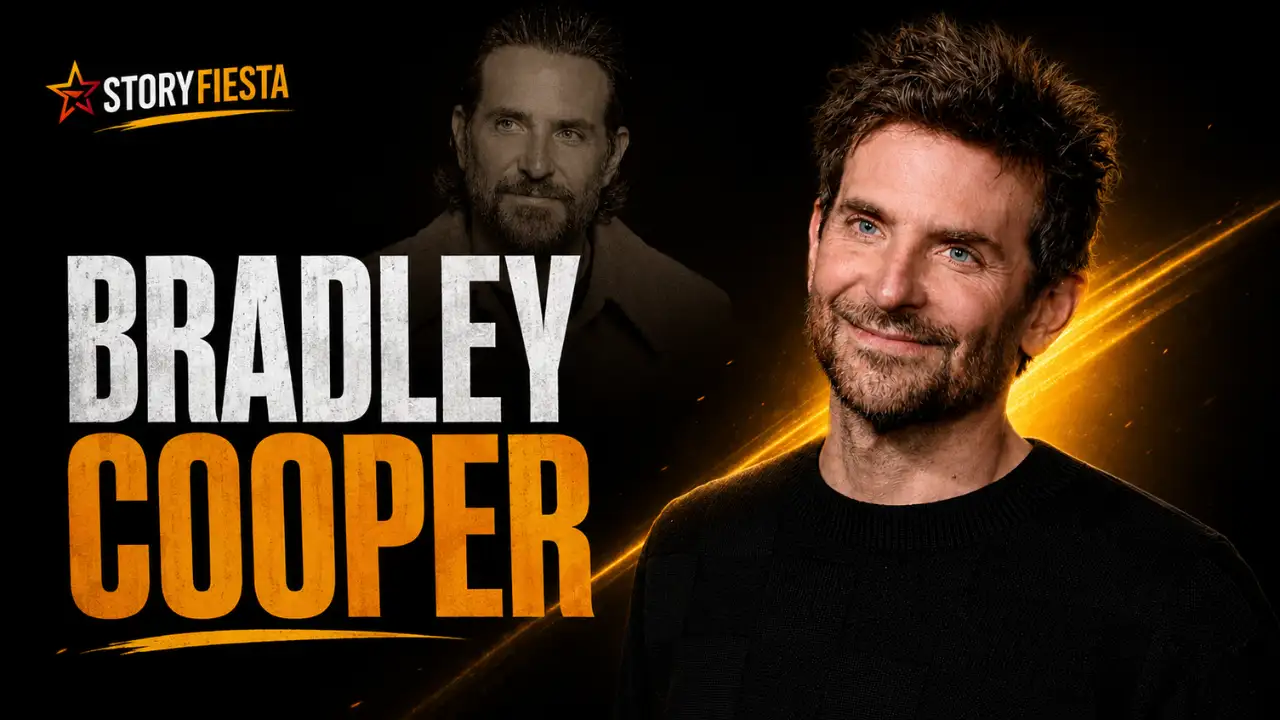
Bradley Cooper’s public work around caregiving began with a responsibility he had not expected to face. When his father developed lung cancer, Cooper became closely involved in his care and encountered the emotional strain, changing family roles, and practical difficulties that can accompany a serious illness.
That experience later became the basis for more organized work. Cooper founded the One Family Foundation, supported a national PBS documentary about caregiving, and helped develop Care Out Loud as a public-facing initiative. These projects highlight the paid and unpaid caregivers whose work is often essential but insufficiently recognized.
His involvement did not emerge as a short-term campaign attached to a professional release. It developed from a family experience, followed by nonprofit activity, documentary production, and direct public testimony about what caregiving can demand.
When His Father’s Illness Changed His Perspective
Cooper has said that he did not think closely about caregiving until his father was diagnosed with cancer. Once illness entered the family, caregiving was no longer an abstract subject. It involved responding to daily needs, working through a complicated care system, and adjusting to a reversal in which a parent who had once provided support increasingly needed it.
Cooper held his father in deep respect and looked up to him throughout his life. Watching him move from independence to requiring intensive assistance made the experience especially difficult. Cooper became a primary caregiver, giving him direct knowledge of the pressure families can carry while trying to make decisions during a serious illness.
The responsibility was both practical and emotional. Family caregivers may need to coordinate appointments, understand unfamiliar information, respond to changing conditions, and continue meeting ordinary obligations at the same time. Cooper has spoken about the weight and isolation that can develop even when a family has support and resources.
His father died from lung cancer in 2011. In a later CBS interview, Cooper said the loss put everything else into perspective. He did not present that change as a simple lesson or an easy resolution. It became a lasting point of reference in how he understood illness, responsibility, and the people who provide care.
Turning Personal Experience into Organized Support
Cooper founded the One Family Foundation in honor of his father. The foundation’s caregiving initiative connects its purpose directly to his experience as a primary caregiver.
Official descriptions state that the foundation works to ease burdens affecting patients, caregivers, and families dealing with serious illness. Its work recognizes that treatment affects more than the person receiving medical care. Relatives and other caregivers may also face emotional exhaustion, confusing systems, disrupted routines, and responsibilities for which they have had little preparation.
Cooper’s experience gave the organization a specific starting point. He had encountered the difference between wanting to help someone and knowing how to manage all the duties that care requires. Even with support around him, he found the process overwhelming at times.
The foundation’s work later broadened into a larger effort to make caregiving more visible. Rather than treating caregiving only as a private family responsibility, its public projects bring paid and unpaid caregivers into a wider national discussion.
Giving Caregivers a Wider Public Voice
One of Cooper’s most substantial public projects on the subject was his role as executive producer of a national PBS documentary released on June 24, 2025. The program examines the experiences of paid and unpaid caregivers across the United States.
Cooper also appears in the documentary and discusses caring for his father. His contribution is personal, but the project is not centered only on his family. It presents stories from caregivers dealing with different circumstances and places those accounts within the broader conditions surrounding care in America.
The documentary was directed by Chris Durrance and narrated by Uzo Aduba. Cooper’s role as executive producer allowed him to support a wider examination of the issue while contributing his own first-hand experience.
Caregiving can be deeply meaningful, but that does not remove its physical, emotional, or financial pressures. The documentary allows caregivers to describe both the difficulties and the meaningful aspects of their work in their own accounts.
The project also recognizes professional caregivers alongside relatives and friends providing unpaid support. This broader perspective presents caregiving as a common part of everyday life, not a responsibility limited to a few families.
Building the Care Out Loud Initiative
The One Family Foundation expanded its public work through Care Out Loud, an initiative developed to make caregivers and their responsibilities more visible. The program’s official account traces its origins to Cooper’s experience supporting his father through illness.
Care Out Loud approaches caregiving as something that can affect families in many forms. A caregiver might support an aging parent, a relative with a serious illness, a child with a disability, or another person who cannot manage every daily need independently. The circumstances differ, but the need for information, recognition, and dependable support can be similar.
Visibility is an important part of the initiative. Care work often happens privately and may not be treated as formal labor, even when it requires substantial time, planning, and emotional attention. Bringing these experiences into public discussion can give caregivers a clearer language for describing what they do.
The initiative also aims to make care easier to navigate. Families are frequently required to learn unfamiliar systems while already managing an urgent or emotionally difficult situation. Cooper’s own account emphasizes that the presence of resources does not automatically make those systems simple.
Care Out Loud allowed the foundation’s work to continue beyond the documentary’s release. It created a dedicated public platform centered on caregivers rather than limiting the subject to one broadcast or one family’s history.
Earlier Service to Children and Families
Cooper’s documented involvement with people facing serious illness predates his more recent caregiving projects. Before joining the board of The Hole in the Wall Gang Camp, he spent a week volunteering there as a counselor.
The organization provides programs for children with serious illnesses and their families. Cooper participated in a summer session serving children with immunology-related conditions. He later said he was struck by the camp’s ability to give children room to form friendships, enjoy ordinary childhood experiences, and spend time away from the identity imposed by illness.
In June 2014, the organization officially announced that Cooper had joined its board of directors. His earlier volunteer service meant that he had already experienced its work directly before accepting a formal role.
The camp was also extending outreach into the Philadelphia area at the time, including programs that brought camp activities to children receiving hospital care. The available record does not establish how long Cooper remained on the board, but it confirms that his involvement included both personal service and organizational responsibility.
How Personal Responsibility Influenced His Growth
Cooper has also spoken directly about struggles that preceded his caregiving advocacy. During a 2022 podcast conversation, he discussed cocaine, alcohol, and the low self-esteem he experienced earlier in adulthood.
He credited Will Arnett with having an honest conversation with him around July 2004. According to Cooper, Arnett challenged him to consider his conduct and helped him recognize that he had a problem. Cooper described that exchange as the beginning of a meaningful change in his life.
His comments were specific to his own experience. They did not provide a complete medical or treatment history, but they did establish that direct intervention from a trusted friend played an important role in his decision to change.
Fatherhood later introduced another form of responsibility. During a February 2024 interview, Cooper explained that parenthood made him more conscious of his choices and their possible impact on his daughter. He also spoke candidly about emotional attachment developing over time rather than appearing instantly.
These experiences belong to different parts of his life, yet each involved a shift away from viewing responsibility only through personal needs. A friend confronted him about his behavior; he later cared for his father through cancer; and parenthood required him to consider how his choices might shape another person’s life.
A Public Role Shaped by First-Hand Experience
Cooper’s public involvement connects three documented areas: caring for his father, founding the One Family Foundation, and supporting national caregiving projects.
Cooper’s involvement is grounded in his experience of entering the care system as a family member. In his public accounts, he has described watching his father lose independence, assuming unfamiliar responsibilities, and relying on relatives and professional caregivers during a difficult period.
The One Family Foundation and Care Out Loud extend that experience into sustained public work. Their emphasis remains on recognizing caregivers, reducing isolation, and helping families better understand responsibilities that often arrive without warning.
Conclusion
Cooper’s work around caregiving can be traced to a clear personal origin: his father’s cancer diagnosis and the responsibilities that followed. After his father died in 2011, the subject remained part of his public involvement rather than ending with the immediate family crisis.
Through the One Family Foundation, a PBS documentary, and Care Out Loud, he has helped bring greater attention to people providing essential care in homes, hospitals, and communities. His contribution rests on first-hand experience, supported by projects that give caregivers space to describe their own realities.