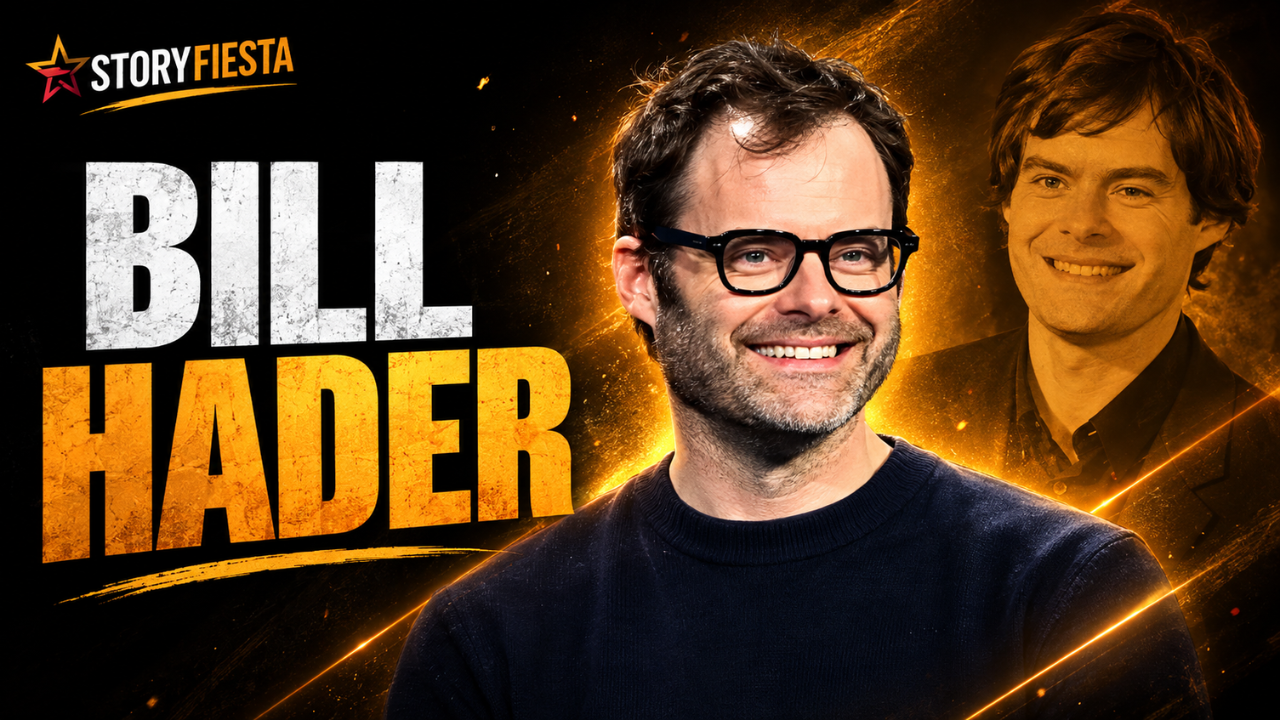
Bill Hader’s path to directing did not begin after he was already established in front of audiences. By his own account, directing was an ambition long before he had the opportunity to lead a major production. He moved to Los Angeles in 1999, worked in entry-level production and post-production jobs, and gradually built experience that later influenced how he approached writing, editing, crews, and creative decision-making.
His work eventually expanded into co-creating, writing, producing, and directing, culminating in responsibility for an entire final season of a major television project. Hader’s interviews also reveal another side of that development: learning to make difficult editing decisions, managing anxiety under pressure, and becoming increasingly interested in creating original work on his own terms.
| Category | Details |
|---|---|
| Early professional work | Production assistant, post-production assistant, and assistant editor |
| Long-term goal | Directing was an ambition before his wider public recognition |
| Creative responsibilities | Writing, producing, co-creating, and directing |
| Directing recognition | Three Directors Guild of America awards for individual episodes |
| Leadership approach | Earlier crew experience influenced how he thinks about running a set |
| Creative preference | Has expressed interest in writing and directing original material |
| Current professional work | Continues to have producing and development responsibilities |
How Early Filmmaking Interests Came Before His Public Career
Hader has traced his interest in creating visual stories back to childhood in Tulsa, where he made short projects with his sisters. The available interviews do not establish a detailed childhood timeline, but they make clear that working behind the camera was not a late addition to his professional interests.
That ambition became more concrete when he moved to Los Angeles in 1999. Hader has said he arrived wanting to make his own work but initially found employment much further down the production hierarchy.
He began in production support roles, moved into post-production, and also spent a short period working as an assistant editor on reality TV. These were not high-profile positions, but they put him inside the practical process of completing a production.
That early period matters for understanding his later career. He already wanted to pursue directing before public recognition gave him the chance to do it on a larger scale.
Why Directing Was a Long-Term Goal Rather Than a Late Career Change
Hader has described directing as an area where he felt an unusual degree of confidence. Even when he was uncertain about other parts of his professional life, he believed he could direct.
His later move behind the camera therefore represented less of a sudden reinvention than the return of an earlier ambition. Public recognition came first, but his interest in directing had been present long before he could make it central to his work.
The distinction matters because his career can otherwise look as though directing emerged only after success elsewhere. His own account gives a different chronology: he wanted to direct, spent time working in production, developed other professional opportunities, and eventually gained enough responsibility to combine several creative roles.
By the time he was co-creating, writing, producing, and directing a major series, he was finally working in the broader creative capacity he had wanted for years.
How Editing Changed the Way He Approached Directing
One of Hader’s clearest accounts of learning to direct comes from the editing process.
He has recalled that an early pilot cut ran roughly 45 minutes, even though the intended format was about 30 minutes. Working alongside Alec Berg and editor Jeff Buchanan forced him to reconsider how he judged individual shots and sequences.
Hader said the experience taught him not to protect a shot simply because it looked impressive. If a moment did not help the story or character, its visual quality was not enough reason to keep it.
That lesson shaped how he thought about directing more broadly. Shooting material was only one part of the process; understanding what survived the edit became equally important.
Rather than treating directing as a collection of attractive images or isolated ideas, he began thinking more carefully about how individual choices served the larger structure.
A similar long-term transition appears in Jonathan Frakes’s television-directing career, which also developed through production learning and extensive experience in the editing room.
How His Production Background Influenced the Way He Runs a Set
Hader’s earlier production jobs also shaped his views about leadership.
Having worked in lower-level positions, he has said he understands how much a director’s behavior can affect everyone else on a production. Long delays, indecision, anger, or unnecessary perfectionism don’t stay isolated at the top. They can extend the workday and put additional pressure on the crew.
He has specifically spoken about remembering that crew members have families and lives outside work. That awareness became part of how he described his responsibilities once he was making major decisions.
His perspective is grounded in practical experience rather than a generalized management philosophy. Before he had authority over a set, he had already worked on productions where he responded to decisions made by others.
That background appears repeatedly in his comments about efficiency. He does not describe decisiveness as a creative virtue alone; he connects it to the time and working conditions of everyone involved.
How His Directing Responsibilities Expanded Over Time
Hader’s behind-the-scenes responsibilities eventually became substantial.
Official records confirm that he worked as a co-creator, executive producer, writer, and director on the project that became the main platform for this phase of his career. His involvement increased to the point that he directed all eight episodes of its final season.
Institutional recognition followed. The Directors Guild of America honored his work on three individual episodes corresponding to the 2018, 2019, and 2022 eligible work years.
Those awards better capture his development than simply describing him as someone who occasionally directed. By the final season, he oversaw every episode from the director’s chair while staying involved in the wider creative process.
The progression also completed a much longer professional arc. The production assistant who had once arrived in Los Angeles hoping to direct eventually became responsible for an entire season at the highest creative level.
What Hader Has Said About Anxiety While Directing
Hader has spoken openly about anxiety, particularly in relation to the pressure of live television. He has described experiencing severe anxiety and panic attacks, including one episode that occurred while he was performing on air.
He later said he sought therapy and used meditation while trying to manage those experiences.
His comments about directing are more nuanced. Hader has said that the same tendency to worry can sometimes make him think several steps ahead professionally. When directing, anticipating what might go wrong can help him stay aware of practical problems before they develop.
At the same time, he has described recognizing when anxiety begins affecting the people around him. In those situations, he may briefly leave the immediate work environment, speak privately with someone he trusts, or meditate before returning.
Hader has also spoken about becoming very depressed during the COVID-19 pandemic and allowing some difficult emotions from that period to enter his creative work. These accounts come from his own interviews and describe his personal experience rather than a broader explanation of his career.
Why Original Writing and Directing Remain Central to His Plans
After completing his major long-running television work, Hader said his interest remained focused on creating material rather than simply moving toward the largest available commercial opportunities.
In 2023, he explained that although people had asked whether he wanted to enter major franchise work, he preferred to write and direct projects that originated from his ideas.
That process has not been straightforward.
In a 2025 conversation with Ari Aster, Hader discussed beginning a horror-oriented script after finishing his previous series. An early negative reaction from a producer affected his confidence enough that he put the project aside.
He later became interested in returning to it. His account is useful because it presents creative uncertainty as part of the process even after substantial professional recognition.
The verified material contains no confirmed title, cast, production schedule, or release date for that project. Hader only confirmed that he remained interested in developing original work and directing it himself.
Where His Directing and Producing Work Stands in 2026
Hader’s post-series work still includes development and producing responsibilities.
In April 2025, reputable reporting said he and Daniel Zelman were developing a project about Jim Jones and Jonestown for HBO. They were reported as co-writers, co-showrunners, and executive producers, with Hader expected to direct if the project moved forward.
He discussed the project publicly again at a Variety industry event in September 2026, indicating it was still being discussed more than a year after the initial development report. Verified research, however, shows development had not progressed to a completed production or confirmed release.
His current responsibilities also include executive-producing a Warner Bros. project scheduled for release in November 2026. That role continues the broader pattern of Hader working beyond performance and taking responsibility for how projects are developed and produced.
He has also recently spoken about technological changes affecting production work. During the September 2026 Variety event, he focused on the value of skilled craftspeople, including production designers, while discussing concerns about artificial intelligence in the industry.
His recent development and producing work keep him behind the camera, while his interviews continue to highlight original writing and directing as his main creative interests.