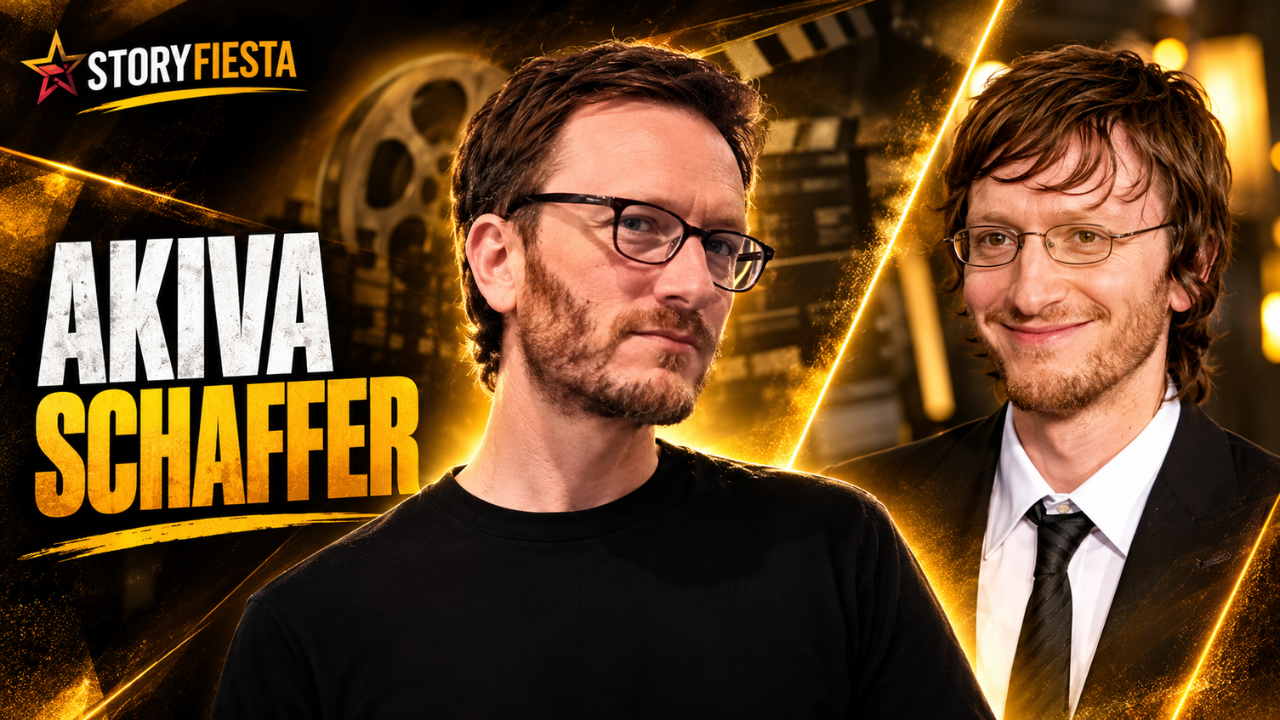
Akiva Schaffer is best known for building comedy from behind the camera—as a writer, director, producer, and longtime member of The Lonely Island alongside Andy Samberg and Jorma Taccone. His professional path did not begin with a conventional television job. It developed through years of making low-budget comedy with friends, learning production through repetition, and deliberately trying to establish a distinctive creative voice before entering network television.
This early experience helped shape the direction his career would later take. After joining Saturday Night Live as a writer in 2005, Schaffer continued working largely behind the scenes, eventually expanding into directing and executive producing. In interviews, he describes a process built around collaboration, studying how comedy works, and sometimes choosing creative interest over the most obvious professional opportunity.
| Category | Details |
|---|---|
| Background | Grew up in Berkeley, California |
| Education | UC Santa Cruz, Oakes College 2000 alumnus |
| Early studies | Spent roughly two years studying computer science |
| Main professional roles | Writer, director, and producer |
| Long-term collaborators | Andy Samberg and Jorma Taccone |
| Major career transition | Joined network sketch comedy as a writer in 2005 |
| Industry recognition | Television Academy lists 14 Emmy nominations and two wins |
How Berkeley and UC Santa Cruz Shaped His Early Creative Direction
Schaffer grew up in Berkeley, California, where his connection with Jorma Taccone and Andy Samberg began well before any of them had established professional careers. Their later collaboration therefore did not originate in a writers’ room or through an industry introduction. It grew out of an earlier friendship and shared interest in comedy.
His education also took a less direct route than a standard entertainment-career narrative might suggest. UC Santa Cruz identifies Schaffer as an Oakes College 2000 alumnus. He has said that he spent roughly two years studying computer science before his attention moved more strongly toward filmmaking and creative work.
That background matters in his later career because he didn’t enter professional comedy with only writing experience. By the time larger opportunities arrived, he had already spent years thinking about how to produce, record, edit, and present ideas.
Schaffer has also connected parts of his comedic sensibility to growing up in Berkeley. In later interviews, he described having a deep familiarity with the cultural references he and his collaborators drew on. He presented that familiarity as something developed naturally through their upbringing rather than something adopted only after they began working professionally.
How DIY Comedy Became His Practical Training
After college, Schaffer, Samberg, and Taccone moved to Los Angeles. Their early period there was far removed from a polished professional operation. They worked regular jobs while continuing to create comedy together outside working hours.
Schaffer later described this cycle of writing, shooting, and editing their own material as unplanned professional training. Instead of learning each stage of production separately, they repeatedly went through the entire process themselves.
That repetition gave Schaffer practical experience before he was operating inside a major television organization. An idea had to move from writing into production and then through editing, often without the resources available on a larger professional set.
This period also reflected an intentional career choice. Schaffer has said the group did not immediately pursue every conventional television-writing opportunity available to them. They wanted time to establish their own comedic voice.
That decision involved financial uncertainty, according to his own retrospective account, but it allowed them to keep producing work in a style they controlled. Rather than treating their pre-professional years as time spent waiting for a break, Schaffer has described them as the period when they learned how to make their ideas work in practice.
Why His Role at SNL Was Mainly Behind the Camera
The major transition came in 2005, when Schaffer and Taccone joined Saturday Night Live as writers while Samberg joined the cast.
For Schaffer, the move did not mean abandoning the production habits the trio had already developed. Their experience creating material independently could now be applied within network television, with greater resources but also much larger expectations.
While Samberg joined the cast, Schaffer worked primarily as a writer and behind-the-camera creative. His documented contribution centered on writing, directing, and digital production rather than regular on-camera performance.
Official Television Academy records also establish the scale of his work during and after this period. The Academy currently lists him with 14 Primetime Emmy nominations and two wins. His first listed win dates to 2007, relatively early in his network career.
His documented SNL work included writing, directing, and digital production, although the available institutional records do not provide a definitive total for every short he personally directed or edited.
How His Work Expanded Into Directing and Producing
Schaffer’s work later moved beyond writing into broader directing and producing responsibilities.
Television Academy records confirm that he became an executive producer on PEN15 and I Think You Should Leave with Tim Robinson. The Lonely Island’s official project material also identifies him as a director on the latter.
Those credits show a continuation of the skills he had developed earlier in his career. He was no longer only contributing material within an established comedy program; he was also taking responsibility for developing and producing other projects.
His producing work also received institutional recognition. Schaffer was among the executive producers credited when I Think You Should Leave with Tim Robinson received the 2023 Emmy for Outstanding Short Form Comedy, Drama or Variety Series.
Those executive-producer credits establish Schaffer’s producing role, although they do not specify his day-to-day responsibilities on every production. Producing nevertheless became a documented part of his later professional work.
His career therefore developed across several connected disciplines rather than through a sharp switch from one job to another. Writing, directing, editing-related decision-making, and producing all grew from the broader process of constructing comedy behind the scenes.
What Schaffer Has Said About His Creative Process
Some of the clearest information about how Schaffer works comes from his own interviews.
He has described studying established comedy closely when taking on a project, looking at how particular techniques function rather than simply trying to reproduce the surface style. His comments suggest a practical approach: break down what makes a form work, understand its internal rules, and then decide how those lessons can apply to the new material.
That method connects naturally with his earlier experience making low-budget work. The emphasis is not only on generating ideas. It is also on understanding how those ideas function once they move into production and editing.
Schaffer has also discussed being selective about major professional opportunities. In one documented case, he said he was initially hesitant to accept a prominent directing assignment and needed to find a creative reason that made the work worthwhile.
That comment is more useful as an example of his decision-making than as a broad statement about his personality. It shows that professional scale alone has not always been enough to determine which projects interest him.
He has similarly described at least one later Lonely Island project as a low-budget labor of love the group created without certainty that it would receive a formal release. In that case, the group chose to make the project because they wanted to pursue the idea rather than because they had already secured a release.
Schaffer has also acknowledged the pressure surrounding public response. In a 2025 interview, he described feeling considerable relief when a project received positive reviews after he had worried that it might be received poorly. His account was about the professional experience of waiting for critical reaction rather than a broader statement about his health.
Why Collaboration Has Remained Central to His Work
The relationship between Schaffer, Samberg, and Taccone has lasted across different stages of their careers.
Schaffer has said that working with the other two again after pursuing separate projects reminded him how naturally their collaboration functioned. That observation is especially relevant because their partnership began before any of them entered mainstream television.
They established their process while making material themselves with limited resources. By the time they reached SNL, they already had experience dividing creative responsibilities and turning ideas into finished work together.
As their individual professional responsibilities expanded, the collaboration did not disappear. Instead, it became one part of wider careers that included writing, directing, and producing beyond the group’s earliest output.
Their more recent retrospective work also allows Schaffer to explain how earlier material was created. The Lonely Island and Seth Meyers Podcast, launched in 2024, brings the group back to its SNL period and allows its members to revisit production decisions and memories from that era.
Those discussions provide first-hand context decades after the original work. When Schaffer describes a production choice or creative decision himself, readers can distinguish his recollection from later summaries written about the group.
How His Work Continues to Develop
Schaffer continued participating in documented professional projects through 2026.
His participation in The Lonely Island and Seth Meyers Podcast has continued to provide first-hand discussion of the group’s earlier television work and the production process behind it. The podcast was still listed as receiving regular updates when checked in October 2026.
The episode also featured Schaffer taking part in a live Q&A at an American Cinematheque anniversary event. He discussed practical observations about production decisions, test audiences, revisions, and the compromises involved in completing large creative projects.
Recent interviews have likewise shown that he remains interested in the mechanics of comedy rather than discussing his career only in retrospective terms. His comments about studying comedic structure, evaluating opportunities, and understanding why particular techniques work provide a clearer picture of his professional approach than a conventional list of credits would.
His career has developed through a consistent behind-the-scenes thread. The circumstances changed—from self-produced work with friends, to network writing, to directing and executive producing—but the underlying process remained centered on constructing comedy rather than simply being its public face.
That makes Akiva Schaffer’s professional history most useful when understood as a progression in creative responsibility. His early DIY years supplied practical experience, SNL gave that approach a larger professional setting, and his later directing and producing work broadened the role he had been building toward from the beginning.