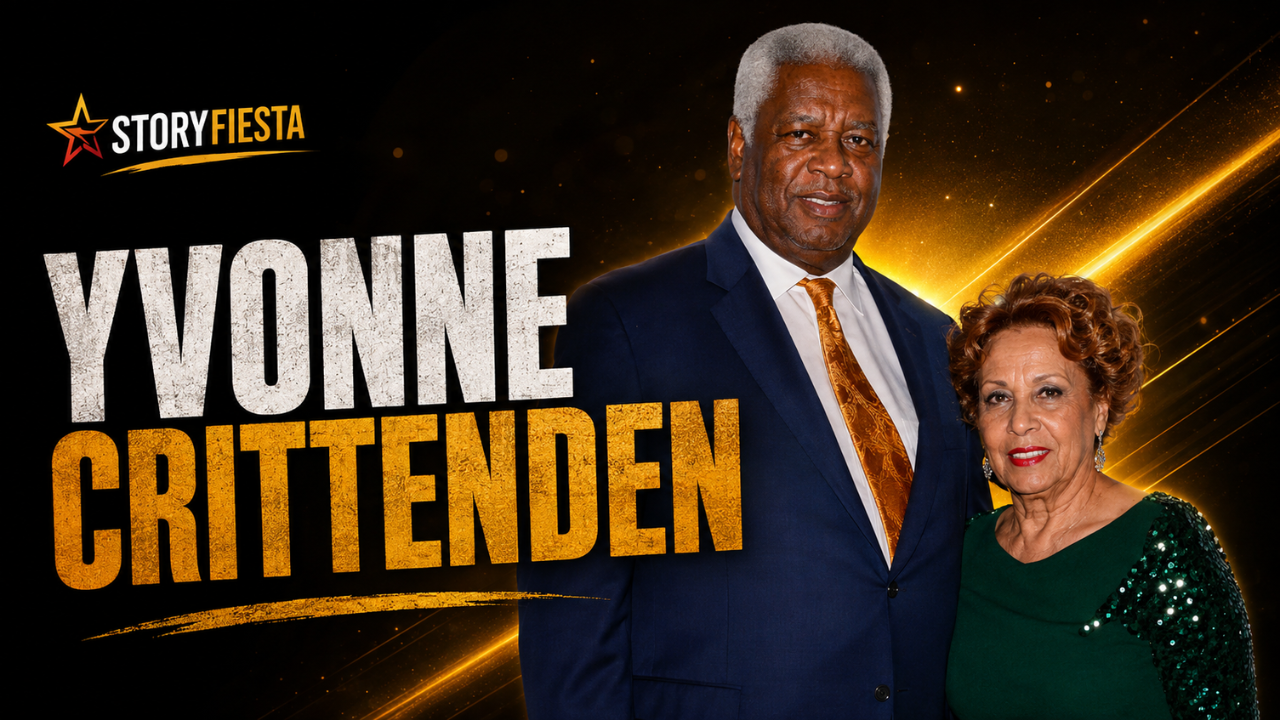
Yvonne Crittenden Robertson is a former elementary school teacher and longtime Cincinnati community volunteer. Although she is widely known as Oscar Robertson’s wife, her documented public record includes civil rights participation, educational initiatives, scholarship programs, university fundraising, and more than 30 years of community service.
| Category | Details |
|---|---|
| Full name | Yvonne Crittenden Robertson |
| Education | Bachelor’s degree in elementary education |
| University | University of Cincinnati |
| Graduation year | 1956 |
| Early profession | First-grade teacher in Cincinnati |
| Civil-rights participation | Joined a 1965 Selma-to-Montgomery march |
| Community focus | Education, scholarships, young people, and social services |
| University recognition | University of Cincinnati President’s Award for Excellence |
University of Cincinnati Education and Teaching Career
Yvonne earned a bachelor’s degree in elementary education from the University of Cincinnati in 1956. Contemporary reporting later identified her as a teacher, including a 1961 profile stating she taught first grade in Cincinnati.
Although the available record does not identify the school where she taught, her work in education is well established. It also provides important context for her later involvement with scholarships, youth programs, and initiatives supporting prospective educators.
Her Participation in the 1965 Selma March
Yvonne participated in one of the 1965 civil-rights marches from Selma to Montgomery, Alabama. Reflecting on the experience during a public discussion in 2015, she described it as life-changing and recalled the danger surrounding the journey.
She also explained that she had grown up in Montgomery before her family moved north during World War II. This confirms Montgomery as part of her childhood, although it should not be presented as her verified birthplace.
Her account gives her civil-rights involvement particular significance because it comes from her own recollection. It connects her later community service with an earlier period of direct participation in the struggle for racial equality.
More Than 30 Years of Cincinnati Community Service
By 2004, Yvonne’s civic involvement spanned more than three decades. A statement entered in the Congressional Record that year recognized her sustained service to educational, charitable, and community organizations.
She served as president of Advocates for Youth Education, which awarded college scholarships based on financial need. She was also associated with the Greater Cincinnati Scholarship Foundation and the Greater Cincinnati Youth Collaborative.
Her responsibilities extended beyond educational organizations. Her documented service included trustee-level involvement with the Cincinnati-area Red Cross, the Cerebral Palsy Center, and Family Services of Cincinnati.
These roles show that her community work spanned several organizations rather than being limited to a single campaign or honorary position.
Leadership Supporting Women and Community Programs
Yvonne also held leadership responsibilities in initiatives serving women. She was the first chair of The Gathering, a day-long program created for African American women and focused on personal, social, health, professional, and spiritual concerns.
Her work with The Links, Incorporated added a national dimension to her service. The Cincinnati chapter’s official history records that she served as the organization’s National Arts Facet Chair.
Together, these roles demonstrate her involvement in both locally focused programs and established national service organizations.
Scholarships and Educational Opportunities
Yvonne and Oscar Robertson established three scholarships connected with the University of Cincinnati. The programs supported an incoming university student, prospective educators intending to teach in urban schools, and participants in the university’s Cincinnatus Scholarship competition.
The scholarship for future urban educators was closely aligned with Yvonne’s background. She studied elementary education and worked as a first-grade teacher before becoming involved in broader efforts to support students and young people.
These scholarships extended her association with the University of Cincinnati long after graduation and connected her early profession to her later philanthropic work.
University of Cincinnati Honors and Fundraising Leadership
The University of Cincinnati recognized Yvonne through several honors and leadership appointments.
During 2007–08, the university’s College of Education named her a Distinguished Alumna. She also co-chaired Proudly Cincinnati, a major capital campaign supporting the university.
On June 13, 2009, she received the University of Cincinnati President’s Award for Excellence at commencement. The honor followed decades of involvement in community organizations, educational programs, scholarships, and university initiatives.
Her relationship with the institution therefore extended from earning her degree in 1956 to supporting students, helping lead fundraising efforts, and receiving formal recognition for her service.
Distinguishing Her From the Canadian Journalist
Yvonne Crittenden Robertson should not be confused with the Canadian journalist and book critic also named Yvonne Crittenden. The former Cincinnati teacher, civil-rights participant, and community volunteer has a separate public record connected with Oscar Robertson and the University of Cincinnati.
Yvonne Crittenden Robertson’s documented identity extends beyond that family connection. Her record shows a consistent commitment to education, scholarships, young people, civil rights, and community service in Cincinnati.