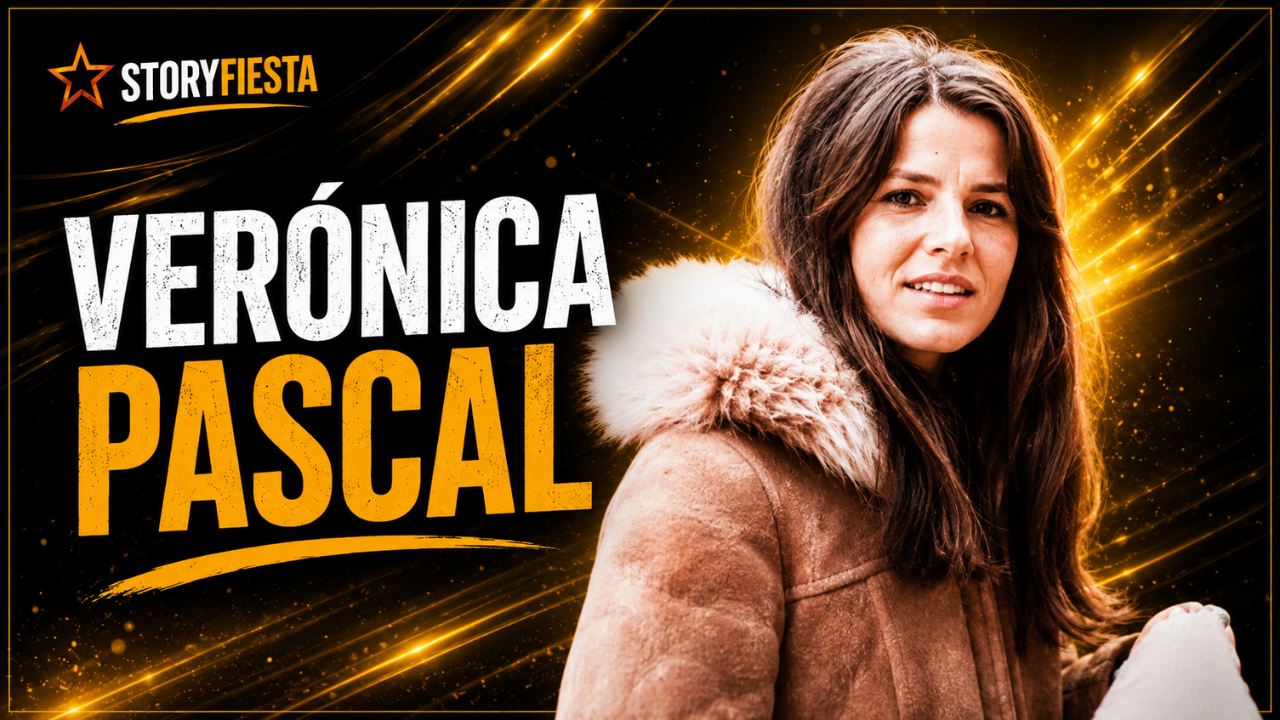
María Verónica Pascal Ureta was a Chilean psychologist and the mother of Javiera, Pedro, Nicolás, and Lux Pascal. Her documented life included political exile during Augusto Pinochet’s dictatorship, graduate study in psychology at Trinity University, and years spent supporting her children’s education and creative interests.
Public interest in Verónica largely comes through Pedro and Lux Pascal, whose first-hand accounts provide insight into her influence on their family. Trinity University clarified an important part of her academic history in 2026 by confirming that she earned an M.A. in Psychology, rather than the PhD described in some older profiles and interviews.
| Category | Details |
|---|---|
| Full name | María Verónica Pascal Ureta |
| Nationality | Chilean |
| Profession | Psychologist; described by her family as a child psychologist |
| Education | M.A. in Psychology from Trinity University |
| Spouse | José Pedro Balmaceda Riera |
| Children | Javiera, Pedro, Nicolás, and Lux |
| Creative interests | Ceramics, painting, collage, and poetry |
Political Exile From Chile
Verónica’s early adult life was shaped by Chile’s political crisis under Augusto Pinochet. Pedro Pascal has described his parents as young, liberal college students who became caught in dangerous circumstances during the dictatorship.
In a 2023 interview, Pedro explained that a close relative on his mother’s side was involved with the opposition movement. His parents helped someone who had been wounded following a violent confrontation, after which the authorities began looking for them.
Verónica and José went into hiding for approximately six months before seeking refuge in the Venezuelan embassy. Pedro has been careful not to portray his parents as revolutionaries. His account instead presents them as young students whose political connections and decision to help an injured person placed them in danger.
After leaving Chile, the family received asylum in Denmark and lived in Aarhus for a time. They later moved to the United States and settled in San Antonio, Texas.
Published accounts differ over whether the family reached San Antonio in 1981 or 1982. The broader sequence is consistently documented: they escaped Chile, received asylum in Denmark, and then settled in the United States.
Her Psychology Education at Trinity University
Verónica continued her education while raising a young family in San Antonio. Trinity University has confirmed that she graduated with an M.A. in Psychology.
That confirmation corrected a claim repeated in several older profiles. Pedro himself referred to his mother as having a PhD, but Trinity’s institutional record identifies her qualification as a master’s degree in psychology.
Verónica is consistently described as a psychologist, while Lux Pascal has specifically referred to her as a child psychologist. However, publicly available records do not provide a detailed employment history or identify a particular clinic, hospital, or long-term practice where she worked.
Pedro’s recollections also show that she completed her studies while caring for young children. When regular childcare was unavailable, she had to arrange her academic responsibilities around the practical demands of parenting.
She earned her psychology degree during a demanding period when the family was rebuilding its life after exile and relocation across several countries.
How Verónica Supported Pedro Pascal’s Education
Verónica played an important role in Pedro’s education, particularly after the family moved from Texas to California.
Pedro has described being bullied and struggling to fit into his local school environment. He believes his mother’s decision to remove him from that setting and find an arts-focused school was crucial to his well-being and development.
Her support extended to the books, theatre, and ideas that interested him. When a book strongly affected Pedro, she would sometimes read it herself. When a theatrical experience became important to him, she made an effort to attend and understand it.
Pedro has distinguished this involvement from the behavior of a controlling stage parent. His accounts describe Verónica as encouraging and intellectually curious, but not as someone attempting to manage his future career.
Later, when Pedro felt divided between family concerns and his studies, he believed his mother wanted him to continue pursuing his own path rather than give up his ambitions for her sake.
Returning to Chile and Pursuing Creative Interests
In 1995, Verónica and José returned to Chile with their younger children, Nicolás and Lux. Pedro remained in the United States, where he continued his education and early professional work.
Lux Pascal’s memories provide some of the clearest details about Verónica’s later years. Lux has recalled making pottery with her mother and described it as one of her final memories of their time together.
According to Lux, Verónica became increasingly involved in creative work during the last years of her life. Her interests included ceramics, painting, collage, and poetry.
These pursuits were personal rather than a documented professional art career. No reliable evidence shows she exhibited commercially or worked through galleries, but Lux’s account establishes creativity as a meaningful part of her mother’s later life.
Her Lasting Influence on Pedro and Lux Pascal
Pedro and Lux have provided complementary accounts of their mother. Pedro has remembered Verónica as funny, emotionally complex, and deeply interested in the people and ideas around her. Lux’s recollections emphasize her sensitivity and engagement with pottery, visual art, and poetry.
The most detailed chronological accounts place Verónica’s death on February 4, 2000, although some reputable profiles have reported February 4, 1999. Published reporting states that she died by suicide. Her family has spoken about the loss publicly, but no single explanation for her death has been established, and speculation about her motives would be inappropriate.
After losing his mother, Pedro began using Pascal, her surname, professionally. He has explained that the decision honored her memory while also giving him a surname that casting professionals in the United States found easier to pronounce than Balmaceda.
Her influence also shows in how Pedro describes his development. His memories repeatedly return to her encouragement, her engagement with his interests, and her determination that he should continue building an independent future.
Verónica Pascal’s Documented Legacy
Verónica Pascal’s public record extends beyond her identity as Pedro Pascal’s mother. She experienced political persecution and exile, earned a graduate qualification in psychology, raised four children across major family relocations, and actively supported their education and creative development.
Trinity University’s confirmation of her M.A. in Psychology has resolved a frequently repeated error about her academic qualification. First-hand accounts from Pedro and Lux add a more personal picture of a psychologist shaped by displacement, parenting, education, and creativity.