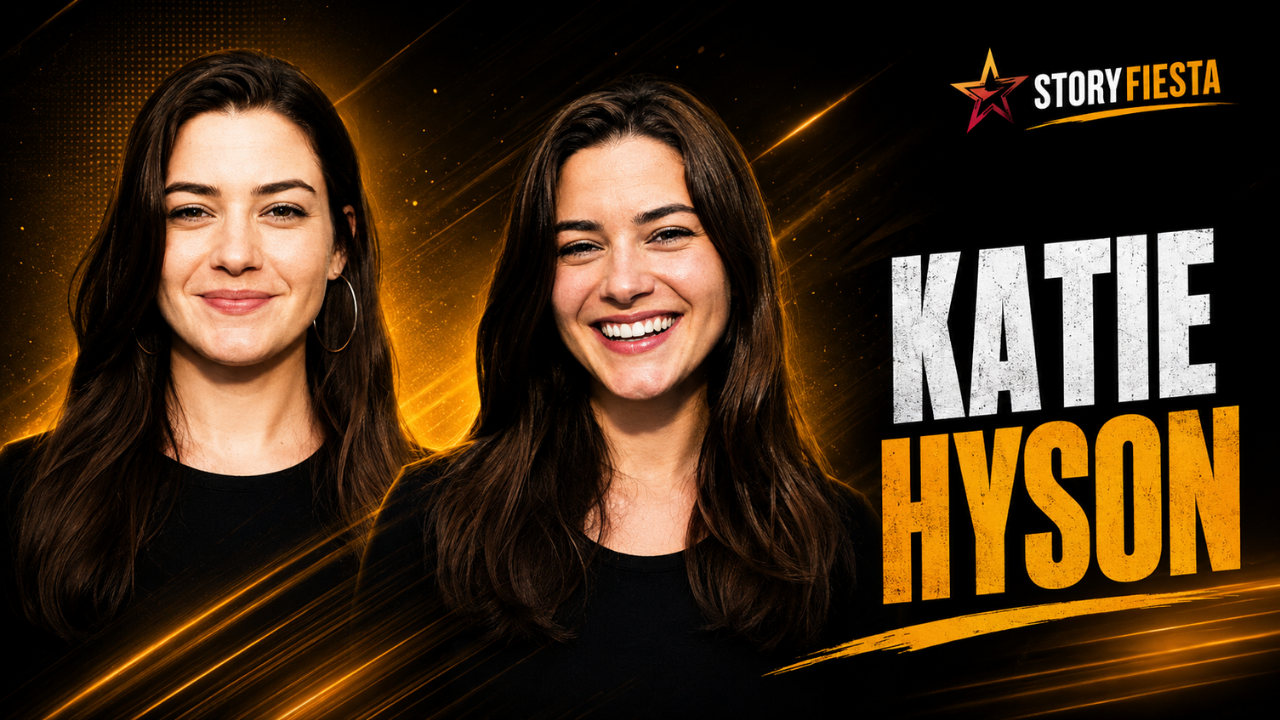
Katie Hyson is a journalist at KPBS Public Media, where she works as the station’s Racial Justice and Social Equity Reporter. Her reporting covers subjects including policing, housing, education, public institutions, inequality, and communities that have often received limited attention from local news organizations.
Her professional background includes journalism education, editing and teaching at the University of Florida, reporting at WUFT, and investigative audio work at KPBS. Before joining KPBS, Hyson worked at the University of Florida and reported for WUFT through Report for America. More recently, she served as reporter, producer, and host of a KPBS investigative podcast and became a 2026 Livingston Awards finalist in Local Reporting.
| Category | Details |
|---|---|
| Current role | Racial Justice and Social Equity Reporter |
| Employer | KPBS Public Media |
| Graduate education | Professional master’s degree in mass communications, University of Florida |
| Undergraduate education | Florida State University |
| Earlier journalism roles | Digital-content supervising editor, adjunct lecturer, and WUFT reporter |
| Reporting focus | Racial justice, social equity, institutional accountability, and underserved communities |
| Investigative audio work | Reporter, producer, and host of a KPBS investigative podcast |
| Professional recognition | GroundTruth Award recipient and Livingston Awards finalist |
Journalism Education and Early Professional Roles
Hyson attended Florida State University as an undergraduate before later completing a professional master’s degree in mass communications at the University of Florida in 2020. KPBS identifies Florida State University as her undergraduate alma mater, while the confirmed record does not specify her degree or field of study there.
At the University of Florida College of Journalism and Communications, she worked as supervising editor of digital content at the Innovation News Center. She also served as an adjunct lecturer, taught multimedia journalism, and developed a two-course digital-production practicum.
Journalism was not her first field of work. Official professional biographies also describe earlier experience in immigration advising, organic farming, and nonprofit assistance involving sex workers.
Hyson later explained in a first-person WUFT essay that working on a farm helped influence her decision to pursue journalism. She became concerned about unfair working conditions and considered ways to respond to them. Storytelling eventually became the route she chose.
Report for America and WUFT Defined Her Early Reporting Focus
Hyson joined WUFT as a Report for America journalist on June 1, 2021. Her initial assignment centered on racial justice issues in East Gainesville and inequalities affecting surrounding communities in North Central Florida.
The beat developed into broader reporting about racial and rural inequities, local institutions, and communities whose experiences were not always well represented in traditional news coverage.
In her March 2023 farewell essay for WUFT, Hyson described listening as central to her approach to journalism. She connected that principle to her interest in helping communities see their experiences represented more accurately rather than reduced to incomplete or distorted narratives.
That philosophy was especially relevant to the kind of local reporting she was doing. Instead of treating community stories only as isolated news events, her work often involved history, institutional decisions, and the effects of those decisions on people living in the area.
Local Reporting Brought Professional Recognition
One of Hyson’s best-documented early investigations examined the history and disappearance of a Black marching-band tradition in Gainesville.
The work received significant recognition from Report for America in 2022. Hyson won the organization’s GroundTruth Award and placed first in its Feature Writing category.
Further recognition followed through the Society of Professional Journalists Florida Pro Chapter. She was named a 2023 Journalist of the Year finalist in the Sunshine State Awards. She did not win that category, which went to Scott Travis.
Her individual reporting was also recognized. A story about disappearing Black-owned farms won first place in Light Feature Reporting, while the marching-band investigation received second place in Public Affairs.
These awards documented several different areas of her work rather than a single isolated project: community history, agricultural change, racial inequality, and public-affairs reporting.
Moving to KPBS Expanded Her Racial Justice Reporting
Hyson confirmed in a March 2023 WUFT farewell article that she was leaving WUFT and moving to San Diego to report on race and equity for KPBS.
At KPBS, she became the station’s Racial Justice and Social Equity Reporter. Her coverage has included policing, housing, education, government institutions, and questions involving access, accountability, and unequal treatment.
Her reporting remained active through August 2026. Recent work included coverage of internal-affairs findings involving San Diego police practices, a housing-development lawsuit, and the future of independent oversight at San Diego County juvenile institutions.
The range of subjects fits the reporting focus established earlier at WUFT while placing it in a different region and institutional environment.
Investigative Audio Became a Larger Part of Her Work
Hyson later expanded further into long-form audio through a KPBS investigative project, where she served as reporter, producer, and host.
The series examined the 2018 death of San Diego police officer Ciara Estrada and questions surrounding how the case was investigated. Hyson said the reporting began after Estrada’s mother contacted her following earlier work involving police and domestic abuse.
In a November 2025 interview, Hyson explained why podcast reporting appealed to her for complicated investigations. Long-form audio gave her more room to develop competing perspectives, preserve the voices of the people involved, and avoid compressing a difficult story into a brief news segment.
She also described an evidence-heavy reporting process. According to Hyson, the investigation involved thousands of pages of primary-source documents. She said she left out some compelling interview material when she could not corroborate it sufficiently through records, photographs, expert evidence, or other supporting information.
That context helps clarify the project’s purpose. The series explored disputed circumstances and questions about the investigation into Estrada’s death; Hyson did not present herself as having definitively solved the case or established an alternative perpetrator.
Personal Experience Has Informed Some Reporting Decisions
While discussing the same investigation, Hyson revealed that someone she loved had died violently. She did not publicly identify that person or specify the exact relationship in the material used for this profile.
She said seeing someone she cared about reduced in news coverage to the circumstances of their death affected how she approached Estrada’s story. Rather than beginning only with the disputed circumstances of the death, she wanted listeners to understand Estrada as a person first.
Hyson also described spending extended periods interviewing members of the Estrada family. Some conversations lasted for hours, and she said she deliberately allowed more silence between questions rather than pushing grieving people quickly through difficult memories.
These comments directly explain some of her professional choices without requiring assumptions about her wider private life or personality.
Her public comments about journalism show a similar emphasis on listening. From her earlier WUFT work to later investigative audio, she has repeatedly described giving people sufficient space to explain their experiences as part of the reporting process.
Her Recent Work Has Reached a Broader Professional Audience
Hyson returned to Gainesville in 2025 to revisit the marching-band story that had brought her earlier recognition. The follow-up centered on a former Eastside High band member becoming the school’s new marching-band director.
In an October 2025 Report for America interview connected to that return, she discussed what can be lost when local newsrooms shrink. Hyson argued that smaller cultural and community stories can disappear from the news agenda, leaving important pieces of local history undocumented.
Her investigative audio work subsequently received broader recognition. On April 22, 2026, the Wallace House Center for Journalists at the University of Michigan announced Hyson and her KPBS project as finalists for the Livingston Awards in Local Reporting.
Hyson was a 2026 Livingston Awards finalist, while William Skipworth was announced as the Local Reporting winner on June 9, 2026.
The finalist recognition nevertheless marked a significant national acknowledgment of a project that differed in format and scope from her earlier local feature reporting.
Katie Hyson’s Work Connects Local Reporting With Deeper Investigation
At KPBS, Hyson has continued the community-focused reporting that shaped her WUFT work while adding longer-form investigations to her portfolio.
Racial justice and social equity remain central to her professional beat, but her work also extends into community history and institutional accountability. She describes her reporting process as emphasizing listening, primary documentation, corroboration, and giving complex stories space to develop.
Her professional recognition has accompanied that shift, from Report for America and SPJ Florida honors to a 2026 Livingston Awards finalist placement. As of August 2026, she remained actively reporting for KPBS in San Diego.