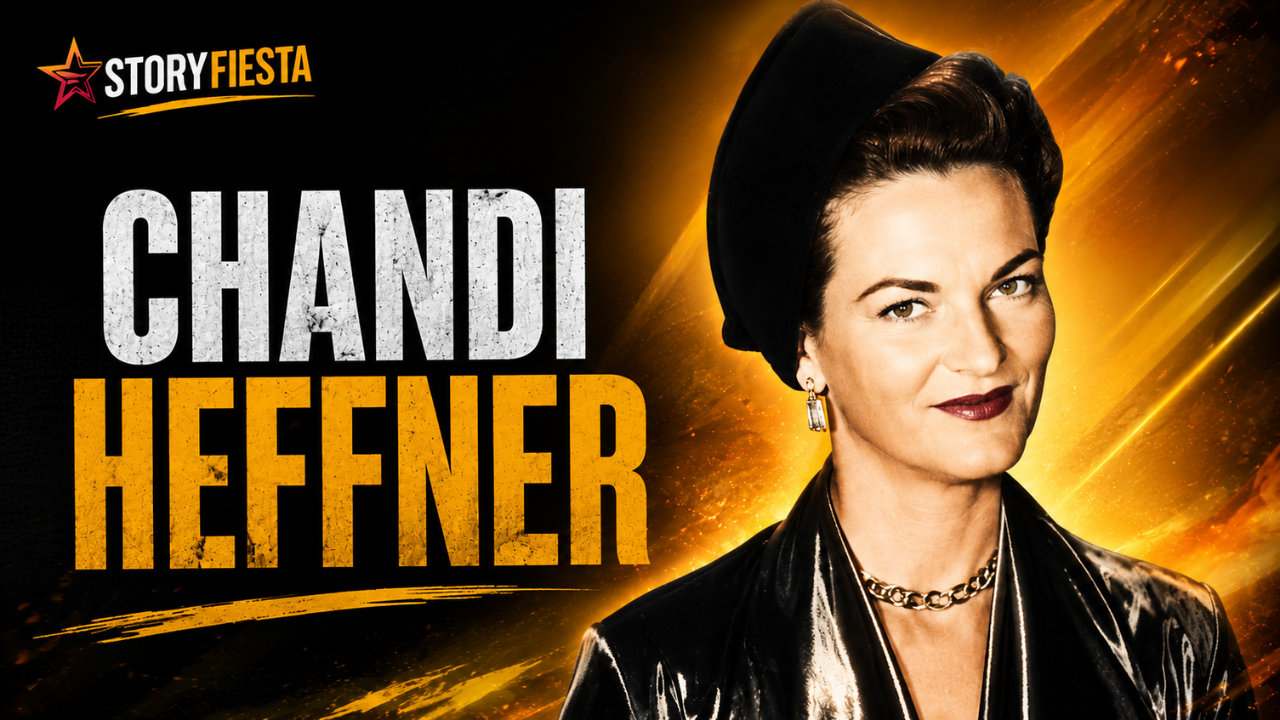
Chandi Heffner became publicly known after tobacco heiress Doris Duke adopted her as an adult in 1988. Their relationship later deteriorated, leading to Heffner’s removal from Duke’s estate plans and a major legal dispute over promised financial support.
The conflict ended in December 1995, when Heffner accepted a court-approved settlement of $65 million and withdrew her claims against Duke’s estate. Although this remains the most widely reported part of her story, reliable records also document her later involvement with a Hawaii ranch, retired police horses and an Olympic-level show-jumping partnership.
| Category | Details |
|---|---|
| Documented name | Charlene Gail “Chandi” Heffner |
| Known for | Doris Duke’s legally adopted adult daughter |
| Estate resolution | Court-approved $65 million settlement |
| Ranch involvement | Owner of Keawewai Ranch when it accepted retired police horses |
| Equestrian connection | Minority ownership interest in show-jumping horse Authentic |
Her Background Before the Adult Adoption
Contemporary reporting identifies her as Charlene Gail “Chandi” Heffner and describes her as a Baltimore native. Reports published during the estate conflict place her birth around 1953, although no authoritative record reviewed for this profile establishes an exact birthday.
The available material provides little dependable information about her education or early employment. The Washington Post described her as a former belly dancer, but no professional record was found that supplies dates, employers, or a broader account of that work. It is therefore a limited description from contemporary reporting rather than the basis for a verified career history.
By the 1980s, Heffner was living in Hawaii, where she became acquainted with Doris Duke. Contemporary reports identified Heffner as a follower of the Hare Krishna movement. That description belongs to a particular period in her life and does not establish her present religious affiliation or beliefs.
How Chandi Heffner Became Doris Duke’s Adopted Daughter
Heffner and Duke met in Hawaii during the 1980s, but reliable accounts disagree about precisely when. Court papers attributed to Heffner reportedly placed their meeting in 1981. The Newport Restoration Foundation, drawing on historical material connected with Duke, gives 1985 instead. Other reporting also associates their introduction with a dance class in Hawaii.
The firmly established date is 1988, when Duke formally adopted Heffner as an adult. Heffner was approximately 35, while Duke was in her mid-70s. Through the adoption, Heffner legally became Duke’s daughter, formally establishing the family bond between them.
The Newport Restoration Foundation describes Duke as feeling a strong maternal connection with Heffner. Reports from the period also said Duke associated her with Arden, the daughter Duke had lost shortly after birth in 1940. That account records Duke’s reported belief and the emotional context surrounding the adoption; it is not an independently verifiable description of Heffner.
During their time together, the women moved among Duke’s properties, including Duke Farms in New Jersey, Rough Point in Rhode Island and Shangri La in Hawaii. In her later court account, Heffner said she became involved in household staffing, estate administration, the Duke Farms dairy and other practical responsibilities.
She portrayed their routine as including travel, household management and vegetarian dinners. Because those descriptions appeared in legal papers during a dispute, they represent Heffner’s version of their shared life rather than neutral findings reached by a court.
The Breakdown of Their Familial Relationship
The close relationship did not last. According to the Newport Restoration Foundation, Duke disinherited Heffner in 1990. Heffner’s court account placed their breakup in February 1991, creating a small difference between the institutional chronology and the version reported from her legal filing.
By then, Duke had removed Heffner from her estate plans. Reporting on Duke’s later documents indicates that she regretted the adoption and questioned Heffner’s motives. Those remarks represent Duke’s later perspective, rather than verified evidence of Heffner’s original intentions.
Accounts from other people associated with Duke also differed sharply from Heffner’s description. Heffner maintained that she had rearranged her life to assist Duke and manage responsibilities around the properties. Some former employees portrayed the relationship as unstable and difficult. The surviving public record therefore documents the collapse of the relationship more clearly than it establishes a single reason for it.
Disinheritance also did not necessarily end Heffner’s legal status as Duke’s adopted daughter. The reviewed evidence confirms that Duke excluded her from the final estate plan, but it does not establish that a court annulled the 1988 adoption. That distinction later became important because Heffner pursued claims connected both with promised support and Duke’s estate.
The Claims Made Against Doris Duke and Her Estate
Before Duke died, Heffner filed a breach-of-contract action in New Jersey. She alleged that Duke had promised to support her for the rest of her life in exchange for the companionship and assistance Heffner said she provided.
The Washington Post reported in April 1993 that Heffner claimed she had become deeply involved in managing parts of Duke’s domestic and financial life. Her filing referred to staffing, estate conditions, security and other responsibilities. It also maintained that she learned after their breakup that Duke had changed her will and would no longer leave the estate to her as allegedly promised.
These statements formed the basis of Heffner’s claim, but filing them in court did not make them facts. No final judgment cited in the reviewed material determined whether Duke had made an enforceable promise of lifelong support.
When Duke died at 80 in October 1993, her final will left Heffner out and allocated most of the estate to charity. The estate was reported to be worth approximately $1.2 billion at the time of the later settlement proceedings.
After Duke’s death, Heffner became involved in the legal challenges surrounding the will and estate administration. Vanity Fair published an exclusive interview with her in March 1994 while she was fighting her exclusion. The accessible archival page confirms that the interview occurred, although the full text is restricted.
The legal proceedings included questions about Heffner’s position as Duke’s adopted daughter, the claimed promise of continuing support, and her potential interest in Duke family trusts. Rather than producing a final public trial judgment on those issues, the dispute ended in a negotiated settlement.
How the $65 Million Settlement Resolved the Dispute
On December 28, 1995, Manhattan Surrogate’s Court Judge Renee Roth signed a settlement between Chandi Heffner and the Duke estate. Contemporary reporting placed the payment at $65 million, although some later accounts used the slightly higher figure of $65.8 million.
In return, Heffner withdrew her claims against the approximately $1.2 billion estate. She also dropped the breach-of-contract case alleging that Duke had promised to provide for her throughout her life.
The agreement gave Heffner a substantial payment without making her the beneficiary of Duke’s final will or giving her control of the full estate. Most of Duke’s fortune remained directed toward charitable purposes. Describing the settlement as an inheritance can therefore blur an important legal difference: Heffner received money through a negotiated resolution of disputed claims, not through the principal provisions of Duke’s final estate plan.
A settlement also does not establish that every allegation made by either side was true. It resolved the financial dispute without requiring a final ruling on whether Duke had promised lifelong support, why their relationship ended, or what motivated the adoption.
The $65 million figure is the strongest verified financial detail connected with Heffner. It is historical, however, and provides no responsible basis for calculating her present net worth. Later investments, expenses, taxes, assets and liabilities are not established in the reviewed record.
Her Documented Work With Horses
Heffner’s public record did not end with the Duke estate litigation. By 2010, reputable Hawaii reporting identified her as the owner of Keawewai Ranch on the Big Island.
That year, the ranch agreed to provide a retirement home for seven horses that had served with the Honolulu Police Department. The horses were named Chief Lee, Cruiser, Scout, Kuhio, Trooper, Justice and Cinbad. The arrangement allowed police representatives to visit the animals after their transfer to the ranch.
Heffner also participated in elite equestrian ownership. United States Equestrian Federation records and established equestrian publications identify her as one of several stakeholders in Authentic, the show-jumping horse ridden by Beezie Madden.
Shares in the horse were distributed among a partnership that helped keep Authentic with Madden during the period surrounding the 2004 Olympic campaign. Heffner held a minority interest rather than being the horse’s sole owner. Authentic and Madden became closely associated with the United States team at the highest level of international show jumping.
An April 2025 tribute following Authentic’s death included Heffner among the wider group of owners and supporters connected with the horse. The mention provides a recent institutional reminder of her historical role in the partnership, though it does not identify a current occupation or new equestrian project.
Her ranch ownership, assistance with retired police horses and investment in Authentic provide a documented area of activity separate from the Doris Duke proceedings. They do not, however, establish that she worked professionally as a competitive rider, trainer or breeder.
What the Verified Record Does Not Establish
Despite decades of public interest in the Duke estate, Chandi Heffner does not have a detailed, independently documented professional biography. Reliable records reviewed for this profile do not establish her exact birthday, formal education, or current occupation.
No authenticated personal website or verified social-media account belonging to her was identified. Search results for the name “Chandi” often lead to unrelated people, making unsupported account attribution particularly unreliable.
The available material also does not provide authoritative confirmation of her current residence, marital status,s or children. Limited recent coverage cannot establish how she currently lives or whether she deliberately avoids public attention.
Similarly, the 1995 settlement cannot support a present-day wealth estimate. The verified record establishes the amount agreed upon at that time, but not what happened to the money afterward.
Her ownership of Keawewai Ranch was documented in 2010. Without a more recent institutional or property record, its current ownership and activities remain outside the confirmed account. The same limit applies to broader claims that she operates a registered animal-welfare charity or maintains a professional equestrian career.
Conclusion
Chandi Heffner entered the public record through an unusual but legally documented event: Doris Duke’s adult adoption of her in 1988. Their familial relationship later collapsed, and Duke removed Heffner from her estate plans around 1990–1991.
Heffner responded through contractual and estate claims, maintaining that Duke had promised to support her for life. Those disagreements were resolved in December 1995 through a court-approved $65 million settlement rather than a final judgment establishing either side’s broader allegations.
Her later record includes ownership of a Hawaii ranch that accepted retired police horses and a minority interest in the Olympic-level show jumper Authentic. These activities provide a verified dimension of her public history beyond the Doris Duke estate, even though dependable information about her current life remains limited.