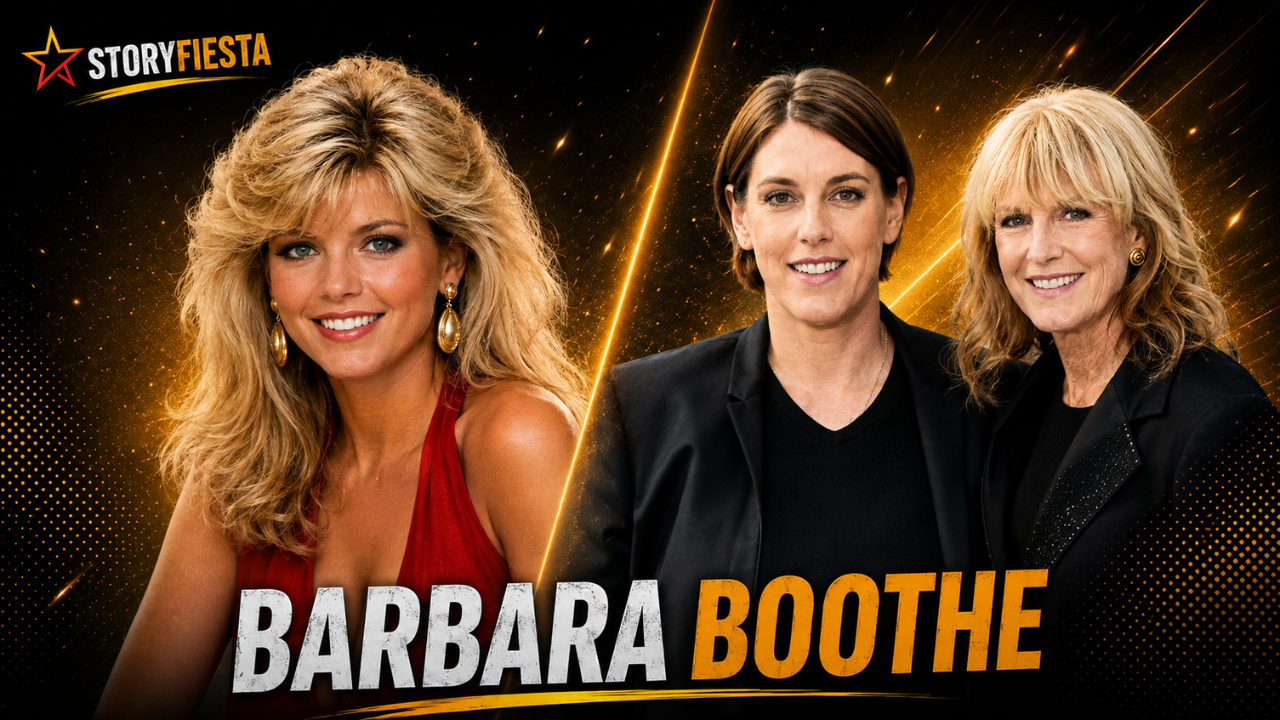
Barbara Boothe has a documented professional history in equestrian breeding that extends well beyond her family connection to Oracle co-founder Larry Ellison. Also known professionally as Barbara or Barb Ellison, she established Wild Turkey Farm in California before developing a large breeding and training facility in Wilsonville, Oregon.
Her involvement with horses began during childhood, when regular riding depended on saving money, working, and receiving help from other horse owners. That early interest eventually developed into a Warmblood breeding operation and brought her national recognition from the United States Hunter Jumper Association.
| Category | Details |
|---|---|
| Professional name | Barbara Ellison or Barb Ellison |
| Primary work | Sport-horse owner and breeder |
| Professional project | Wild Turkey Farm |
| Farm origin | Woodside, California |
| Oregon facility | Wilsonville, Oregon |
| Breeding focus | Warmblood sport horses |
| National recognition | Mrs. A.C. Randolph Owners Legacy Award |
Her Equestrian Interest Began With Limited Opportunities
Barbara has provided a first-hand account of how horses became an important part of her childhood. In a 2008 interview with The Chronicle of the Horse, she said she was one of four children and that her parents did not have enough money to support regular riding.
During family summer visits to Oregon, she saved throughout the year so that she could ride hired horses along the beach. When she was old enough, she began working there and took customers on trail rides for eight to ten hours at a time.
She was approximately 12 when she could first afford weekly lessons with Jay and Claudia Campf. A few years later, another horsewoman, Wheylan Meyers, recognized how much she wanted to ride and allowed her to exercise horses several times a week. Barbara credited that opportunity with giving her access to considerably more riding experience than her family could otherwise provide.
Her account establishes a clear early pattern: opportunities arrived gradually and were often connected to work or support from people already involved with horses. These experiences preceded the ownership and breeding work for which she later became known.
Returning to Riding Led to a Daily Commitment
College interrupted Barbara’s riding, although she did not publicly identify the institution she attended or the qualification she pursued. She eventually returned to lessons during the mid-1980s and began working with trainer Jan Pearce.
Her training schedule expanded rapidly. She progressed from a single weekly lesson to two sessions before eventually riding every day. This increasing commitment led to horse ownership and the beginnings of a more organized equestrian operation.
One of her early purchases was Wizard, a Hanoverian stallion. Barbara explained that she did not buy him with an immediate plan to establish a breeding program. She considered him an exceptional jumper and believed he could have a strong competitive career.
When she changed trainers, she sent Wizard back to rider Hap Hansen rather than moving the horse into her new program. She believed Hansen and Wizard were particularly well suited. The pair later won the first $100,000 grand prix offered in California, according to The Chronicle of the Horse.
The published chronology of Barbara’s return contains one unresolved discrepancy. The 2008 profile places it in 1986 while describing her son as 18 months old, but David Ellison’s reported January 1983 birth date would have made him approximately three that year. Reliable reporting confirms that she resumed regular training, although the stated year conflicts with her son’s reported age.
Wild Turkey Farm Began in California in 1989
Barbara established Wild Turkey Farm in the hills of Woodside, California, in 1989. The operation initially developed around horses she owned rather than through a fixed plan to create a major breeding business.
Her acquisition of Liocalyon in 1996 became an important stage in that development. Wild Turkey Farm identifies him as her first Holsteiner stallion. Other stallions followed, while owners began contacting Barbara about mares that might be suitable for breeding after their competitive careers had ended.
The program therefore grew in stages. Barbara did not describe a single moment when she decided to assemble a large breeding operation. Instead, the combination of stallion ownership, suitable broodmares and demand from other owners gradually changed the scope of the farm.
She also developed a clear approach to horses that had finished working for her. In her interview, Barbara said animals that had served her well would not be sold and would retain a home for life. That policy later influenced the design of the Oregon facility, where she set aside land and a dedicated barn for retired horses.
As the number of stallions, mares and young horses increased, the original Woodside property became less practical. Breeding stallions required travel to Oregon, and the surrounding area was largely residential. Barbara began looking for land that could support separate breeding, training and retirement functions in one location.
An Oregon Orchard Became a Purpose-Built Equestrian Facility
Barbara searched for a suitable property for seven or eight years. In 2001, while attending an Oregon horse show, she learned about neighboring land that was not formally on the market. She visited the site, which consisted of approximately 215 acres of hazelnut trees, and purchased it that year.
The Wall Street Journal later reported a purchase price of $2.995 million. Sources describe the property as approximately 200, 215, or 220 acres, so the figures appear to use different measurements or rounding. It is most accurately described as a roughly 200-acre estate.
Transforming the orchard into an equestrian operation took close to a decade. Barbara planned separate spaces for stallions, broodmares, horses in training and retired animals. The development also incorporated substantial pastures, an indoor arena and supporting agricultural buildings.
The residential portion included a main house of roughly 10,000 square feet and a manager’s residence of approximately 2,500 square feet. The farm sat along the Willamette River near Wilsonville.
Barbara moved to the completed Oregon property in 2011. By then, the land had become a specialized breeding and training center rather than a converted residential farm with a few horse facilities. Wild Turkey Farm described its purpose as producing Warmblood sport horses for competitive disciplines.
Barbara Remained Involved in the Farm’s Daily Work
Wild Turkey Farm’s organizational profile identifies Barbara as its founder and owner and describes her participation in multiple parts of the operation. Her work included involvement with the daily training of young horses, breeding plans and decisions about the design of the property.
The breeding program depended on a broader group of specialists. Trainers worked with young and competitive horses, while breeding personnel managed mares, foals and stallions. Outside riders also campaigned horses produced or owned by the farm.
Barbara’s public comments acknowledge those different contributions. When she received national recognition in 2020, she thanked rider Mandy Porter, longtime trainer and manager Kelli Johnston, breeding specialist Darlene Mardock, the team responsible for starting young horses, farm employees, customers and mare owners who used its stallions.
Her response presented the operation as collective work rather than the achievement of one owner. Some members of the staff had worked with her for nearly two decades by the time of the award.
The farm’s website continued to identify Barbara with the operation when accessed in 2026. However, many of its visible inventory and staffing details were published several years earlier. They document how Wild Turkey Farm operated during that period but do not establish its exact number of horses, employees, or active breeding animals today.
USHJA Recognized Her Contribution to Equestrian Sport
The United States Hunter Jumper Association selected Barbara as the 2020 recipient of the Mrs. A.C. Randolph Owners Legacy Award. USHJA is the organization responsible for the award, making its announcement and winners list the authoritative records of the recognition.
The award was established for owners who provide sustained support to the hunter and jumper disciplines. Its criteria include sportsmanship, owning horses for other riders to compete, supporting equestrian programs, and serving as a role model within the sport.
Barbara was honored during the USHJA Evening of Equestrians program, which aired on December 5, 2020, as part of the organization’s annual meeting. USHJA formally announced the recipients two days later.
Wild Turkey Farm published her response after she learned of the selection. She described herself as deeply honored and placed much of the attention on the people involved with her horses and breeding program.
The association’s current historical record continues to list Barbara among the award recipients. Her selection provides independent institutional recognition of her contribution as an owner and supporter of hunter and jumper competition.
The 2021 Property Listing Marked a Professional Transition
In August 2021, Barbara placed the Oregon equestrian estate on the market for $19.5 million. At the time, the Wall Street Journal reported that she was stepping back from daily farm operations. Her own explanation was brief: she said it was time for the change.
The listing included the land, residences, arena, training areas, barns and other property facilities. Approximately 90 horses were living at the farm when it was listed, but they were not part of the proposed real-estate transaction.
The asking price represented the property after roughly two decades of ownership and extensive development. It was not a confirmed sale price, and it does not provide a reliable calculation of Barbara’s personal wealth.
Publicly accessible information reviewed for this profile does not establish whether the property was eventually sold, the amount paid in any completed transaction, or who owns it now. The farm’s website remained online and continued identifying Barbara as its founder and owner, but that alone does not settle the estate’s current legal ownership or her present residential arrangements.
Wild Turkey Farm Defines Barbara Boothe’s Verified Public Record
Barbara Boothe’s strongest documented work is her equestrian career. Beginning with limited childhood riding opportunities, she returned to regular training as an adult, acquired competition horses and established Wild Turkey Farm in California in 1989.
The operation grew gradually before moving to a purpose-built Oregon property that combined breeding, training and retirement facilities. Her involvement included horse selection, young-horse development, breeding decisions and long-term planning for the farm.
USHJA’s 2020 Owners Legacy Award gave that work national institutional recognition. The 2021 property listing later marked a change in her daily responsibilities, although the outcome of the proposed sale has not been publicly established. Her verified record is therefore best understood through more than three decades of sport-horse ownership, breeding and farm development.