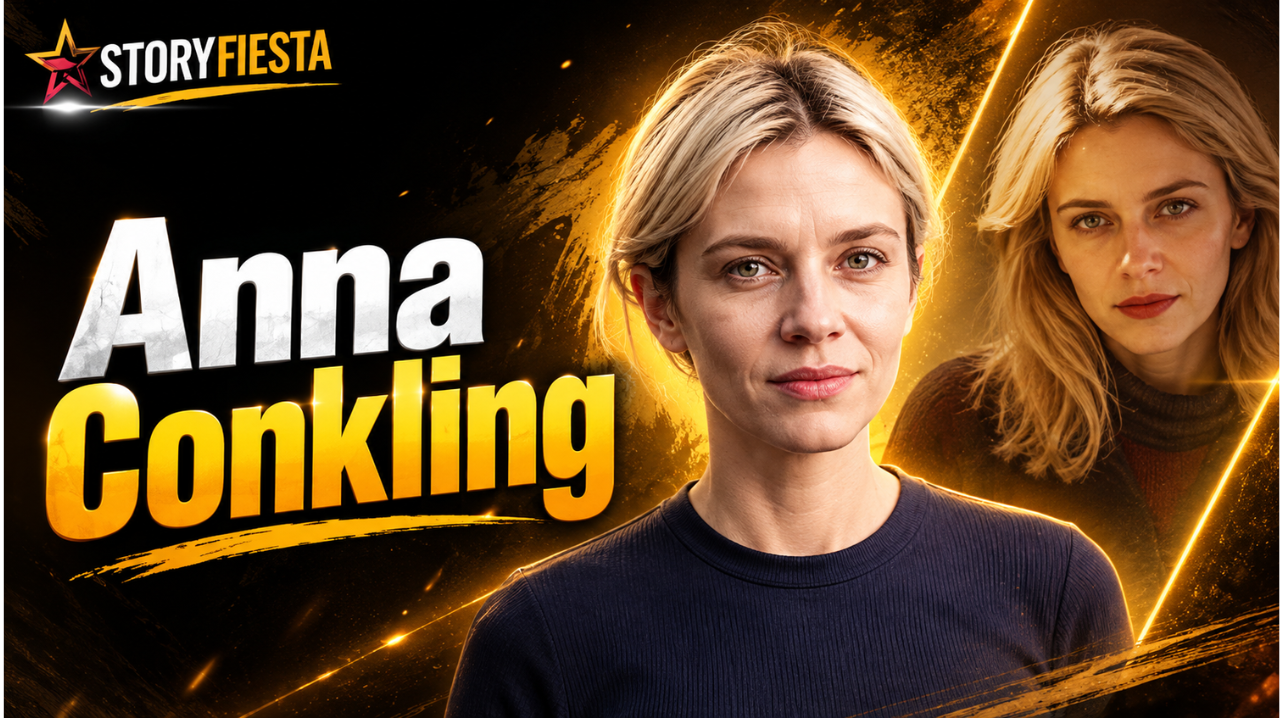
Anna Conkling is an American independent journalist and foreign correspondent who reports on armed conflict, human rights, and the experiences of civilians affected by war. Her work has concentrated particularly on Ukraine, including investigations into the recovery of fallen soldiers’ remains, humanitarian challenges, and everyday life during Russia’s invasion.
Her journalism has appeared in publications including Business Insider, Foreign Policy, and The Sunday Times. In 2026, she became a Livingston Award finalist for Excellence in International Reporting following an investigation into the recovery and identification of Ukrainian soldiers’ remains. Her professional background also includes international assignments, multimedia reporting, and contributions to Noosphere.
| Category | Details |
|---|---|
| Full name | Anna Conkling |
| Profession | Independent journalist and foreign correspondent |
| Education | Journalism + Design, Eugene Lang College, The New School |
| Reporting focus | Armed conflict, human rights, and climate-related issues |
| Notable publications | Business Insider, Foreign Policy, The Sunday Times, The Telegraph |
| International reporting | Ukraine, Armenia, Greece, Lebanon, and Hungary |
| Professional work | Ukraine and international correspondence for Noosphere |
| Recognition | 2026 Livingston Award finalist for Excellence in International Reporting |
Who Is Anna Conkling, the American War Correspondent?
Anna Conkling is a journalist whose international reporting examines how conflict affects individuals and communities. Much of her work has concentrated on Ukraine, although her assignments have also taken her to Armenia, Greece, Lebanon, and Hungary.
Her professional portfolio identifies armed conflict, human rights violations, and climate change among her main reporting subjects. Rather than concentrating exclusively on military operations, she has covered the consequences of war for families, civilian infrastructure, and people attempting to maintain their livelihoods.
Conkling’s articles have appeared in Foreign Policy, Business Insider, The Daily Beast, The Sunday Times, and The Telegraph. Her published work includes investigations into Russian human rights lawyers, Ukrainian war widows, and efforts to identify soldiers killed during the conflict.
She has also contributed to Noosphere’s coverage of Ukraine. In a September 2026 interview with Marie Claire Australia, she was described as based in Berlin and travelling regularly to Ukraine for reporting assignments.
How Anna Conkling Entered International Journalism
Conkling studied Journalism + Design at Eugene Lang College of Liberal Arts, part of The New School in New York City. The university has featured her professional development in an alumni spotlight about her work as a war correspondent.
Before moving into international conflict journalism, she gained experience reporting for local New York publications. Her career subsequently changed direction following Russia’s full-scale invasion of Ukraine on 24 February 2022.
In a September 2026 interview with Marie Claire Australia, Conkling recalled being in New York when the invasion began. She started interviewing members of the city’s Ukrainian community, developing an interest in documenting the conflict and its consequences.
Those early interviews led her towards reporting directly from Ukraine. Her assignments eventually expanded beyond the country, including reporting in Armenia in 2023 and work in Lebanon.
Her experience combined traditional written journalism with increasingly complex international assignments. The subjects she pursued included displacement, civilian experiences, human rights, and environmental consequences of conflict.
Although her professional record establishes her education and early reporting experience, the available institutional sources do not provide an exact graduation date or a complete chronology of her first journalism positions.
Her Frontline Reporting and Coverage of Ukrainian Civilians
Conkling’s reporting from Ukraine has addressed both immediate dangers near the front lines and the longer-term difficulties facing civilians.
In an interview with Scripps News, Conkling described conditions around Dobropillia in eastern Ukraine, where repeated attacks threatened residents and prompted civilians to evacuate.
In early 2026, she also documented the consequences of Russian attacks on Ukraine’s energy infrastructure.
Following attacks in January, residents of Kyiv experienced interruptions to electricity, heating, and water supplies during severe winter conditions. Speaking to Scripps News, Conkling described how these disruptions affected daily routines.
She returned to the subject in a March 2026 Foreign Policy report, Keeping Kyiv Warm Under Fire, examining the difficulties of maintaining essential services during continued attacks.
Her coverage has also explored the financial challenges facing Ukrainian families after the deaths of relatives serving in the armed forces.
In August 2026, Foreign Policy published her investigation into Ukrainian war widows seeking financial support. The reporting examined the administrative and economic difficulties faced by women whose husbands had died during the conflict.
Another assignment for Marie Claire Australia examined Ukrainian beauty salons operating during wartime. Published in August 2026, the report explored how women and businesses continued their daily activities while dealing with the effects of ongoing attacks.
These assignments addressed different aspects of the same conflict, from immediate physical danger to the lasting social and economic pressures experienced by civilians.
The Business Insider Investigation That Earned Livingston Recognition
One of Conkling’s most significant investigations examined the process of recovering, identifying, and returning the remains of Ukrainian soldiers killed during the war.
Published by Business Insider on 17 July 2025, the investigation carried the headline Inside the horrifying business of returning Ukraine’s dead soldiers.
The report addressed the difficult work involved in identifying deceased service members and returning their remains to families.
Conkling later discussed the reporting process in a LinkedIn statement following recognition from the Livingston Awards. She described interviewing investigators, police, and families, as well as visiting morgues and undertaking extensive fact-checking.
Her account provided insight into the research required to investigate an emotionally difficult subject involving grieving relatives and the identification of missing or deceased soldiers.
On 22 April 2026, the Wallace House Center for Journalists at the University of Michigan announced Conkling as a finalist for the Livingston Award for Excellence in International Reporting.
Another 2026 Livingston Awards finalist was Katie Hyson, whose investigative audio reporting for KPBS received recognition in the Local Reporting category.
The award submission was identified as Returning Ukraine’s Dead, referring to her Business Insider investigation.
The Livingston Awards recognise outstanding local, national, and international reporting by journalists aged 34 or younger.
Conkling received finalist recognition in the international reporting category. When the winners were announced on 9 June 2026, the award went to other recipients.
Anna Conkling’s Reporting Beyond the Ukrainian Frontline
Although Ukraine has been central to Conkling’s reporting, her published work extends into human rights, environmental issues, and international affairs.
In November 2025, Foreign Policy published her report, Russia Is Cracking Down on Human Rights Lawyers. The article examined pressure on legal professionals involved in defending human rights in Russia.
Her international assignments have also included Armenia and Lebanon. In her September 2026 Marie Claire interview, she discussed experiences reporting outside Ukraine, including her work in Armenia in 2023.
Her professional portfolio additionally identifies Greece and Hungary among the countries where she has worked, while The Kyiv Independent’s contributor biography refers to reporting in Africa.
Environmental questions form another part of her journalism.
In September 2026, reporting by Conkling published through Grist and The Kyiv Independent explored the role of solar energy in helping Ukrainian communities and businesses respond to attacks on electricity infrastructure.
The article, As Russia attacks Ukraine’s grid, solar offers a path to resilience, examined renewable energy as a possible means of reducing dependence on vulnerable centralised electricity systems.
Her environmental coverage therefore connects with her broader investigations into the civilian consequences of conflict, particularly the challenges of maintaining essential services during wartime.
Her Reporting Approach and Experiences as a Female Correspondent
Conkling has spoken directly about her approach to interviewing people affected by armed conflict.
In her September 2026 interview with Marie Claire Australia, she explained her interest in exploring the cultural, environmental, and personal consequences of war rather than focusing entirely on immediate military developments.
Her approach involves speaking with people whose experiences may receive less attention in conventional coverage of battlefield events.
She also discussed the importance of building trust with interviewees, particularly when they are describing traumatic or deeply personal experiences.
Conkling has discussed how her experiences as a female correspondent have influenced conversations with women sharing sensitive personal accounts.
The interview also addressed the physical dangers of international conflict reporting.
Conkling recalled experiencing nearby attacks during assignments in Ukraine and travelling through areas exposed to military threats, including drones. She discussed the decisions involved in assessing risks while continuing to gather information.
Those experiences have also affected how she communicates with family members. She said she sometimes waits until after completing a dangerous assignment before discussing its risks with relatives.
Conkling has acknowledged the emotional demands of witnessing suffering during reporting assignments. In the same interview, she discussed exercise, journaling, and support received through a therapy grant as part of managing those demands.
Her firsthand accounts provide a perspective on the practical and emotional aspects of working as a correspondent in conflict-affected areas.
Anna Conkling’s Recent Work and Multimedia Journalism
Alongside written reporting, Conkling has developed experience in video journalism and multimedia storytelling.
In a professional retrospective covering 2025, she discussed how her work with Noosphere had expanded her responsibilities. These included editing interviews, appearing on camera, and producing visual reports.
Her work for the platform has included frontline coverage, civilian interviews, and reporting on military technology affecting conditions in Ukraine.
On 5 August 2026, her professional portfolio listed a Noosphere report examining Ukraine’s response to Russian fibre-optic drones.
These assignments added video production and on-camera reporting to her established experience in written journalism.
Her later reporting in 2026 continued to address the human and practical consequences of war.
In August, she published work examining Ukrainian war widows and the experiences of women operating businesses during the conflict. The following month, her reporting on solar power examined efforts to maintain energy supplies amid attacks on Ukrainian infrastructure.
In September 2026, Marie Claire Australia described Conkling as having advanced to an international correspondent role with Noosphere, although the exact date of that change was not specified.
Her recent assignments have combined investigations for established publications with video reporting for Noosphere. From documenting the challenges facing Ukrainian families to examining attacks on essential infrastructure, her work has remained centred on the people affected by armed conflict.